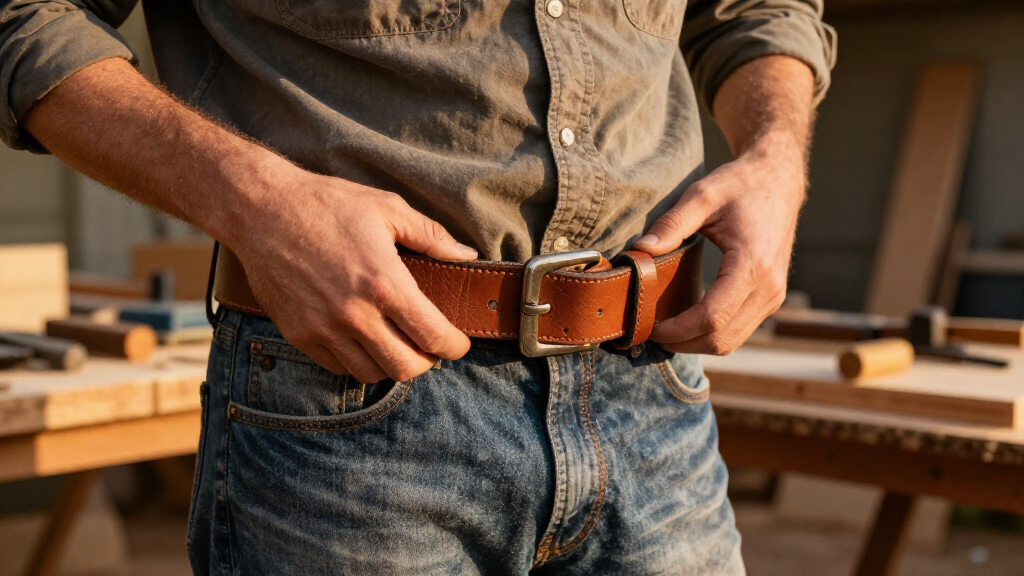

Heavy-duty work belts need to do two jobs at once: hold up pants loaded with tools, pouches, and holsters all day, and survive sweat, friction, and abuse that destroys ordinary dress belts within months. The Carhartt Full Grain Saddle Leather Classic Belt is my best overall pick because full-grain saddle leather is the sweet spot of stiffness, longevity, and all-day comfort for most trades. The Dickies Industrial Strength Leather Belt is the better value if you go through belts quickly, while the Klein Tools 5415XL is the obvious choice for electricians and contractors who hang actual tool pouches from their waist. The main tradeoff in this category is leather versus tactical nylon — leather looks better and stiffens into a custom shape over time, while nylon rigger belts offer micro-adjustability and faster buckle release but look out of place off the job site. Keep reading for the full breakdown of all ten options.

Get business pricing on tools and workshop supplies
- Business-only prices and quantity discounts
- Tax-exempt purchasing
- Multiple users, one account, clear invoices
Complete the kit


Key Takeaways
- Full-grain and saddle leather belts (Carhartt, Klein Tools) outlast split-grain and ‘genuine leather’ options by years, making the higher upfront cost cheaper over time for daily tradespeople.
- Tactical nylon belts with zinc-alloy quick-release buckles (CHAOREN, FAIRWIN, JUKMO, MOZETO) beat leather on adjustability and weight, but their buckles can scratch truck seats and work surfaces.
- The Dickies lineup spans three distinct tiers — casual genuine leather, double prong, and industrial strength — and the differences in thickness and tanning quality justify the price gaps between them.
- The Klein Tools 5415XL is the only true tool-carrier belt in the lineup; every other pick is a pants belt that can handle occasional tool hanging but will sag under a full contractor loadout.
- Stretch-webbing tactical belts (the CHAOREN 1.5″ stretch model) trade some rigidity for comfort, making them better for warehouse and delivery work than for holster or heavy-pouch use.
| CHAOREN Tactical Belt Men – 1.5″ Stretch Work Belt with Zinc Alloy Buckle |  | Best for All-Day Comfort | Fabric Type: 60% Recycled Polyester, 20% Spandex, 20% Polypropylene | Material: High-Tensile Nylon | Buckle Type: Zinc Alloy Quick-Release | VIEW LATEST PRICE | See Our Full Breakdown |
| Dickies Men’s Industrial Strength Leather Belt – Durable Workwear |  | Best Hybrid Leather-Nylon Construction | Fabric Type: 20% PU, 30% GRS Bonded Leather, 20% Split Leather, 30% Polyester | Belt Width: 1.5 inches | Care Instructions: Hand Wash Only | VIEW LATEST PRICE | See Our Full Breakdown |
| JUKMO Tactical Belt, Military Hiking Rigger 1.5″ Nylon Web Work Belt |  | Best Value Tactical Pick | Material: 100% Nylon | Buckle: Aluminum Alloy Quick-Release | Width: 1.5 inches | VIEW LATEST PRICE | See Our Full Breakdown |
| Dickies Men’s Double Prong Leather Work Belt | 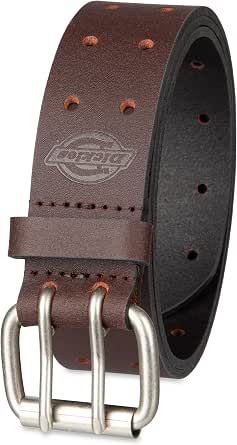 | Best Classic Leather Value | Fabric Type: 100% Leather | Buckle Type: Double Prong Roller Buckle | Adjustability: Fully adjustable with perforated strap | VIEW LATEST PRICE | See Our Full Breakdown |
| FAIRWIN Men’s Tactical Belt, 1.5″ Rigger Utility Work Belt |  | Best Overall for Heavy Loads | Fabric Type: 100% Nylon (1000D) | Length: 53 inches (135cm) | Width: 1.5 inches (3.8cm) | VIEW LATEST PRICE | See Our Full Breakdown |
| Dickies Men’s Genuine Leather Work Casual Belt |  | Best Budget Work-to-Weekend Belt | Material: 100% Genuine Leather | Width: 1.5 inches | Adjustment Holes: 7 | VIEW LATEST PRICE | See Our Full Breakdown |
| Carhartt Men’s Durable Full Grain Saddle Leather Classic Belt | 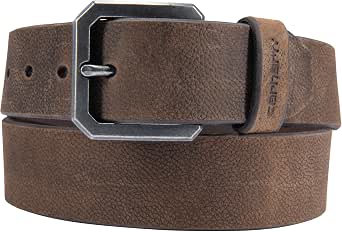 | Best Premium Leather | Fabric Type: 100% Full-Grain Saddle Leather | Width: 1.5 inches | Construction: Reinforced stitching | VIEW LATEST PRICE | See Our Full Breakdown |
| CHAOREN Tactical Belt – 1.5″ Work Belt for Military EDC |  | Best Quick-Release EDC Belt | Fabric Type: 60% Recycled Polyester, 20% Spandex, 20% Polypropylene | Buckle: Heavy-duty zinc alloy quick-release | Width: 1.5 inches | VIEW LATEST PRICE | See Our Full Breakdown |
| Klein Tools 5415XL Heavy-Duty Leather Tool Belt for Contractors and Electricians |  | Best for Contractors and Large Waists | Material: 100% Leather | Buckle Type: Double-tongue | Waist Size Range: 44 to 52 inches | VIEW LATEST PRICE | See Our Full Breakdown |
| MOZETO Tactical Belt – Military Style Heavy Duty Quick Release |  | Best Heavy-Load Tactical Value | Fabric Type: 100% Nylon | Buckle: Aluminum alloy quick-release | Belt Width: 1.5 inches | VIEW LATEST PRICE | See Our Full Breakdown |
| heavy-duty work belt | Fabric Type | Width | Origin | Best Use |
|---|---|---|---|---|
| CHAOREN Tactical Belt Men | 60% Recycled Polyester, 20% Spandex, 20% Polypropylene | 1.5 inches | — | Duty, EDC, outdoor, casual wear |
| Dickies Men’s Industrial Stren | 20% PU, 30% GRS Bonded Leather, 20% Split Leather, 30% Polyester | — | Imported | Work, trade jobs, casual wear |
| JUKMO Tactical Belt | — | 1.5 inches | Imported | Military, SWAT, firefighting, hiking, outdoor work |
| Dickies Men’s Double Prong Lea | 100% Leather | — | Imported | Work, casual, professional everyday wear |
| FAIRWIN Men’s Tactical Belt | 100% Nylon (1000D) | 1.5 inches (3.8cm) | — | Military, tactical, rigging, outdoor work |
| Dickies Men’s Genuine Leather | — | 1.5 inches | Imported | — |
| Carhartt Men’s Durable Full Gr | 100% Full-Grain Saddle Leather | 1.5 inches | Imported | — |
| CHAOREN Tactical Belt | 60% Recycled Polyester, 20% Spandex, 20% Polypropylene | 1.5 inches | Imported | — |
| Klein Tools 5415XL Heavy-Duty | — | — | — | — |
| MOZETO Tactical Belt | 100% Nylon | — | — | — |
More Details on Our Top Picks
CHAOREN Tactical Belt Men – 1.5″ Stretch Work Belt with Zinc Alloy Buckle
Most heavy-duty belts solve the load-bearing problem by being stiff, and your lower back pays for it by Friday. This option takes the opposite approach: spandex-blended stretch webbing flexes as you bend, crouch, and climb, which matters if your workday involves constant movement rather than standing at a bench. The infinite adjustment also beats the hole-based system on the Dickies Double Prong belt — you get quarter-inch precision instead of being stuck between two holes after lunch.
The tradeoff is rigidity. Compared with the FAIRWIN 1000D nylon rigger belt, this one gives up some structure, so a fully loaded holster or drop pouch will sag more. The zinc alloy buckle is smooth and quiet but not rated for load in the way aluminum tactical buckles are.
Pros:- Stretch webbing flexes with movement for genuine all-day comfort
- Infinite micro-adjustment beats traditional hole spacing
- Quick-release buckle works one-handed with gloves on
- Blends into casual wear better than most tactical belts
Cons:- Stretch construction sacrifices load-bearing rigidity for hanging gear
- Too casual in appearance for office or dress settings
Best for: Tradespeople and delivery drivers who move, squat, and twist all day and want a belt that flexes instead of digging in
Not ideal for: Anyone carrying a heavy holster or tool pouch — the stretch weave lacks the rigidity to keep loaded gear from riding down
- Fabric Type:60% Recycled Polyester, 20% Spandex, 20% Polypropylene
- Material:High-Tensile Nylon
- Buckle Type:Zinc Alloy Quick-Release
- Width:1.5 inches
- Adjustability:Infinite adjustment, no holes
- Best Use:Duty, EDC, outdoor, casual wear
Our verdict“Buy this if comfort during constant movement outranks maximum load capacity on your list.”
Dickies Men’s Industrial Strength Leather Belt – Durable Workwear
This belt earns its spot by combining two materials that usually compete: a leather core with a nylon overlay, giving you the structure leather is known for plus the abrasion resistance nylon adds at high-friction points. Painters and handymen who drag against ladders and rough surfaces will notice the difference versus an all-leather belt like the Dickies Double Prong, which wears at the edges over years rather than months.
Be clear-eyed about what you’re getting, though. The material blend includes bonded and split leather with PU, not full-grain hide — the Carhartt saddle leather belt in this roundup is the tougher choice if pure leather longevity is the goal. The 1.5-inch width fits standard loops, and sizing runs two inches over pant size, which is standard but easy to get wrong.
Pros:- Nylon overlay resists fraying where leather belts typically fail first
- Rigid enough to support clipped tool pouches and hammer loops
- Fits all standard pant loops at 1.5 inches
- Multiple sizes available for a precise fit
Cons:- Bonded leather and PU content limits long-term durability versus full-grain options
- Hand-wash-only care is inconvenient for a belt that gets dirty at work
Best for: Painters, handymen, and general contractors who want leather stiffness with nylon abrasion resistance at a midrange price
Not ideal for: Buyers wanting a single-piece full-grain leather belt they can retire with — the bonded construction won’t age that way
- Fabric Type:20% PU, 30% GRS Bonded Leather, 20% Split Leather, 30% Polyester
- Belt Width:1.5 inches
- Care Instructions:Hand Wash Only
- Origin:Imported
- Sizing:Select belt size 2 inches larger than pant size
- Best Use:Work, trade jobs, casual wear
Our verdict“A smart middle ground if you want leather-like structure with better abrasion resistance, as long as you accept the blended construction.”
JUKMO Tactical Belt, Military Hiking Rigger 1.5″ Nylon Web Work Belt
When a tactical belt’s whole job is holding up under abuse, the aluminum alloy quick-release buckle is the headline here — it’s the same buckle category found on belts costing twice as much, and it holds under load without the flex you get from the zinc alloy hardware on the CHAOREN stretch belt. The 100% nylon webbing with a bit of give keeps it wearable through a full shift, and it arrives in a gift box, which is a small thing until you need a present for the gear obsessive in your life.
Where it falls short of the FAIRWIN rigger belt is specifics: there’s no stated weight rating or size range, so you’re trusting the build rather than published numbers. It also runs stiff out of the package and takes a week or two to break in.
Pros:- Aluminum alloy buckle is stronger and lighter than zinc alternatives
- Stretch nylon balances stiffness with flexibility
- Adjustable fit works across a wide range of waist sizes
- Gift-box packaging adds value at this price point
Cons:- No published weight capacity or detailed size range to verify fit and load claims
- Webbing is noticeably stiff until broken in
Best for: Budget-conscious buyers, hikers, and first responders who want aluminum-buckle toughness without the premium price of a rated rigger belt
Not ideal for: Buyers who need verified load ratings for duty-critical gear attachment — the specs here are vague by design
- Material:100% Nylon
- Buckle:Aluminum Alloy Quick-Release
- Width:1.5 inches
- Adjustability:Adjustable fit
- Origin:Imported
- Packaging:Gift box included
- Best Use:Military, SWAT, firefighting, hiking, outdoor work
Our verdict“The most tactical performance per dollar in this batch, provided you don’t need documented load ratings.”
Dickies Men’s Double Prong Leather Work Belt
Sometimes the right tool is the one that hasn’t changed in eighty years. This is 100% leather with a double prong roller buckle, and that design does two things the tactical belts in this roundup can’t: the double prong spreads load across two points so the leather stretches less at the holes, and the roller lets you cinch down smoothly without chewing up the strap. It also looks right with jeans at a job site or a dinner afterward — something no rigger belt can claim.
The compromise is adjustability. Where the CHAOREN and FAIRWIN belts offer infinite fine-tuning, you’re locked into pre-punched hole spacing here, so fit is only as good as where the holes fall on your waist. And unlike the Dickies Industrial Strength hybrid, there’s no nylon reinforcement at wear points.
Pros:- Full leather construction outlasts bonded and synthetic alternatives when cared for
- Double prong roller buckle reduces hole stretch and eases tensioning
- Perforated strap allows broad size adjustability
- Appropriate styling for work and non-work settings alike
Cons:- Fixed hole spacing prevents the micro-adjustment of slide-buckle tactical belts
- Spot-clean-only maintenance and careful sizing measurement required
Best for: Workers who want a traditional, no-batteries, no-plastic belt that transitions from the job site to casual Friday without a second thought
Not ideal for: Anyone carrying EDC holsters or clip-mounted gear — leather without nylon reinforcement flexes and cracks under repeated clip pressure
- Fabric Type:100% Leather
- Buckle Type:Double Prong Roller Buckle
- Adjustability:Fully adjustable with perforated strap
- Care Instructions:Spot clean
- Origin:Imported
- Sizing Advice:Select belt size 2 inches larger than pant size
- Best Use:Work, casual, professional everyday wear
Our verdict“The best value if you want honest, full-leather durability and don’t need tactical attachment features.”
FAIRWIN Men’s Tactical Belt, 1.5″ Rigger Utility Work Belt
This is the belt you buy when failure isn’t an option. The 1100 lbs rated capacity is the number that separates it from everything else here — the JUKMO publishes no rating, and the CHAOREN’s stretch weave shouldn’t be trusted near that territory. Add the V-ring for gear attachment and quick-release metal buckle, and you have a belt that functions as an anchor point, not just a trouser holder. The 1000D nylon is also breathable and fast-drying, which matters if you sweat through shifts or work in the rain.
The cost of that capability is size and weight. It fits waists 42 to 46 inches only and runs bulky, so smaller-framed buyers and anyone wanting a belt for office-casual use should look at the Dickies Double Prong instead. Overkill is real, and here it’s the main drawback.
Pros:- 1100 lbs rated weight capacity for genuine load-bearing use
- V-ring adds dedicated gear attachment most belts lack
- 1000D nylon is breathable and quick-drying in wet conditions
- Quick-release buckle operates fast even with gloves
Cons:- Fits only 42–46 inch waists, excluding most buyers outside that range
- Heavy and bulky for everyday or casual wear
Best for: Firefighters, riggers, and heavy-EDD carriers who need a rated, load-bearing belt that doubles as a gear anchor
Not ideal for: Slimmer builds or casual wearers — the 42–46 inch fit range and heavy hardware make it impractical off the job site
- Fabric Type:100% Nylon (1000D)
- Length:53 inches (135cm)
- Width:1.5 inches (3.8cm)
- Buckle Dimensions:2.4 inches (6cm) width, 5/16 inch (8mm) thickness
- Waist Size Fit:42 to 46 inches
- Weight Capacity:1100 lbs / 500 kg
- Features:V-ring gear attachment, quick-release metal buckle
- Best Use:Military, tactical, rigging, outdoor work
Our verdict“If you need documented strength and gear-anchoring capability, this is the belt to beat — just verify your waist size first.”
Dickies Men’s Genuine Leather Work Casual Belt
Most heavy-duty belts force a choice between jobsite toughness and office-appropriate looks — this one sidesteps that tradeoff for under twenty dollars. The genuine leather construction with reinforced stitching holds up to daily tool pouches better than similarly priced synthetics, and the 1.5-inch width slips through standard belt loops while still looking polished. Compared with the Carhartt saddle leather belt, the leather here is thinner and won’t develop the same rich patina, but it also doesn’t demand conditioning routines. Sizing runs small, so ordering one size up is smart advice rather than a footnote.
Pros:- Genuine leather with reinforced stitching at a budget price
- Versatile enough for work and casual outfits
- Seven adjustment holes for dialing in fit
- Wide size range available
Cons:- Runs small — most buyers need to size up
- Thinner leather won’t handle sustained heavy tool loads
Best for: Budget-conscious tradespeople who want one belt that survives the workweek and passes muster on weekends
Not ideal for: Framers or contractors hauling loaded tool pouches all day — it lacks the 2-inch width and heft of the Klein Tools 5415XL
- Material:100% Genuine Leather
- Width:1.5 inches
- Adjustment Holes:7
- Buckle:Sturdy metal
- Stitching:Reinforced
- Origin:Imported
Our verdict“The value pick for anyone who needs durable leather that works double-duty between the jobsite and everyday life.”
Carhartt Men’s Durable Full Grain Saddle Leather Classic Belt
Full-grain saddle leather is the strongest cut of hide you can buy, and this belt earns its premium role by being the option that improves with age rather than wearing out. Unlike the Dickies casual belt, which is serviceable but flat in character, the Carhartt develops a patina that makes it look better after a year of hard use. The reinforced stitching and rugged hardware mean it can carry a hammer loop on Monday and dress up jeans on Friday. The tradeoff is upkeep: saddle leather needs occasional conditioning, and at this price, neglect shows. Color choices are limited, so pick carefully the first time.
Pros:- Full-grain saddle leather is the most durable leather grade
- Develops an attractive patina over time
- Reinforced stitching extends service life
- Hardware works for both workwear and casual outfits
Cons:- Requires regular leather conditioning to maintain appearance
- Higher price than comparable work belts
- Limited color options
Best for: Buyers willing to pay more for a belt that lasts a decade and looks better every year
Not ideal for: Set-and-forget types who never condition leather — dry cracking will shorten its life considerably
- Fabric Type:100% Full-Grain Saddle Leather
- Width:1.5 inches
- Construction:Reinforced stitching
- Hardware:Rugged metal buckle
- Aging:Develops patina with use
- Origin:Imported
Our verdict“The buy-it-once leather belt for workers who treat gear as a long-term investment.”
CHAOREN Tactical Belt – 1.5″ Work Belt for Military EDC
Where leather belts like the Carhartt saddle prioritize longevity, this one prioritizes speed and flexibility. The heavy-duty zinc alloy quick-release buckle pops open in a second — genuinely useful when you’re clipping on and off a holster or tool pouch a dozen times a day. The webbing includes spandex for stretch, a comfort advantage over rigid nylon options like the MOZETO, though that flex means slightly less rigidity for the heaviest holsters. Sizing is the catch: you trim the belt to length, and there’s no undoing the scissors.
Pros:- Quick-release buckle enables rapid gear changes
- Stretch webbing adds all-day comfort
- Flexible enough to support holsters and EDC gear
- Lighter and more comfortable than leather alternatives
Cons:- Cut-to-fit sizing is permanent with no margin for error
- Stretch material is less rigid than pure nylon belts
Best for: EDC carriers and tradespeople who frequently swap holsters, pouches, or gear and want fast on-off access
Not ideal for: Buyers who want to adjust sizing later — cutting to fit is permanent, and stretch webbing is less rigid for heavy sidearms
- Fabric Type:60% Recycled Polyester, 20% Spandex, 20% Polypropylene
- Buckle:Heavy-duty zinc alloy quick-release
- Width:1.5 inches
- Adjustment:Cut-to-fit, adjustable length
- Gear Support:Holster and tool compatible
- Origin:Imported
Our verdict“The fastest belt in the lineup for anyone whose gear changes throughout the day.”
Klein Tools 5415XL Heavy-Duty Leather Tool Belt for Contractors and Electricians
This is the only true load-bearing tool belt in this lineup, built for framers and electricians rather than general wearers. Its 2-inch width and double-tongue buckle exist to keep a fully loaded pouch set from sagging — something the 1.5-inch belts here simply can’t match. The 44-to-52-inch waist range is also unusual: bigger tradespeople who get shut out of standard sizing finally have a purpose-built option, and it’s made in the USA. The costs are real, though: it’s heavy, unpadded, and useless for anyone under a 44-inch waist. Think of it as equipment, not apparel.
Pros:- 2-inch heavy-duty leather handles fully loaded tool pouches
- Fits 44-52 inch waists where most belts stop
- Double-tongue buckle stays secure under rugged wear
- Made in the USA by a trusted tool brand
Cons:- Heavy and cumbersome compared to nylon tactical belts
- Limited to large waist sizes only
- No padding or comfort features for long shifts
Best for: Large-framed contractors, carpenters, and electricians who carry fully loaded tool pouches daily
Not ideal for: Anyone with a waist under 44 inches, or workers wanting all-day comfort — there’s no padding and the weight adds up
- Material:100% Leather
- Buckle Type:Double-tongue
- Waist Size Range:44 to 52 inches
- Belt Width:2 inches
- Intended Use:Tool carry for contractors and electricians
- Made In:USA
Our verdict“A specialized piece of jobsite equipment for big-framed pros who hang serious tool weight off their hip.”
MOZETO Tactical Belt – Military Style Heavy Duty Quick Release
Compared with the CHAOREN quick-release, the MOZETO trades stretch comfort for raw load capacity — the tear-resistant 100% nylon webbing and aluminum alloy buckle are built for hanging holsters, tools, and riggers’ gear without flex. The 30-to-60-inch waist coverage across five sizes is the widest range among the tactical options here, and cut-to-fit trimming lets each wearer get an exact length. It undercuts pricier rigger belts while matching their core function. The downsides mirror the CHAOREN’s: trimming is permanent, and black is effectively your only color.
Pros:- Tear-resistant nylon handles heavy holsters and tools
- Quick-release aluminum buckle holds under load
- Sized S through 3XL covering 30-60 inch waists
- Works for tactical, hiking, and everyday carry
Cons:- Requires cutting to length with no way to reverse it
- Only available in black
- No stretch, so less forgiving on comfort than elastic-blend belts
Best for: Tactical users, hikers, and workers who need maximum load capacity across a wide size range at a mid-range price
Not ideal for: Buyers who want color variety or adjustability after sizing — cutting is irreversible and only black is offered
- Fabric Type:100% Nylon
- Buckle:Aluminum alloy quick-release
- Belt Width:1.5 inches
- Buckle Width:2.0 inches
- Waist Range:30″ to 60″
- Size Options:S (#115cm) to 3XL (#165cm)
- Care:Wet wipe clean
Our verdict“The stiffest, most load-capable tactical belt for the money, provided you’re confident about your sizing.”
How We Picked
I ranked these belts on four factors that actually determine whether a heavy-duty belt survives a work year: material grade (full-grain leather and mil-spec nylon rank above split leather and generic webbing), buckle or fastener strength (metal frames and locking clips rank above friction-only designs), load behavior (how well the belt resists sagging, rolling, and deformation when carrying a tool pouch, holster, or loaded pockets), and value over time rather than sticker price alone. A $20 belt replaced three times a year loses to a $45 belt that lasts three years, so I weighted durability heavily.
That logic drives the order: leather workhorses that balance comfort, stiffness, and versatility sit at the top; tactical nylon belts cluster in the middle because they excel at adjustability but trade off rigidity and off-hours appearance; casual leather options rank lower for heavy loads; and the Klein Tools tool belt holds its specialized spot because it serves a job the others physically cannot. Where two belts tie on material, buckle design and real-world fit range broke the tie.
| heavy-duty work belt | Best Use |
|---|---|
| CHAOREN Tactical Belt Men | Duty, EDC, outdoor, casual wear |
| Dickies Men’s Industrial Stren | Work, trade jobs, casual wear |
| JUKMO Tactical Belt | Military, SWAT, firefighting, hiking, outdoor work |
| Dickies Men’s Double Prong Lea | Work, casual, professional everyday wear |
| FAIRWIN Men’s Tactical Belt | Military, tactical, rigging, outdoor work |
| Dickies Men’s Genuine Leather | — |
| Carhartt Men’s Durable Full Gr | — |
| CHAOREN Tactical Belt | — |
| Klein Tools 5415XL Heavy-Duty | — |
| MOZETO Tactical Belt | — |
Factors to Consider When Choosing Heavy-duty Work Belts
Choosing between these ten belts comes down to matching construction and fastener style to what your waist actually carries on a Tuesday afternoon. These are the factors that separate a belt that lasts a decade from one that rolls and sags by spring.Leather Grade Matters More Than Brand
The single biggest quality gap in this category hides in the leather label. Full-grain leather keeps the entire hide surface intact, which is why the Carhartt saddle leather belt resists stretching and cracking for years. ‘Genuine leather’ sounds reassuring but legally covers lower split layers bonded together — those belts feel stiff in the store and go soft, wavy, or cracked within months of daily sweat exposure. Tanning method matters too: oil-tanned and saddle-tanned hides flex without creasing, while chrome-tanned budget hides look good initially but break down faster under UV and abrasion. A useful in-store test is to fold the belt sharply; quality full-grain will resist taking a permanent crease. If you work outdoors or in heat, spending the extra $15–25 on full-grain typically pays for itself inside two years.
Nylon Tactical Belts: Where They Win and Where They Fail
Rigger-style nylon belts solve problems leather cannot — they adjust in millimeter increments rather than hole spacing, shed water without staining, and dry fast after rain or sweat. That micro-adjustability is why warehouse workers, delivery drivers, and anyone whose weight fluctuates prefer them. But nylon has real limits: a loaded tool pouch will eventually roll the webbing and dig into your hips, because nylon lacks the structural stiffness of thick leather. Quick-release metal buckles also introduce tradeoffs — they are fast to open but can scratch vehicle seats, counter surfaces, and finishes on jobsites. If you carry a sidearm or heavy pouches daily, look for reinforced webbing (stiffer, typically 1.5″ military-spec) over stretch blends, which prioritize comfort over rigidity.
Buckle and Fastener Strength
The buckle is the most common failure point on cheap work belts, not the strap. A double-prong roller buckle, like the Dickies double prong model, spreads load across two attachment points and resists twisting under a hanging tool pouch — at the cost of being slower to fasten and harder to adjust mid-day. Zinc-alloy quick-release frames are convenient and adequately strong for EDC loads, but the cheapest cast versions crack at the hinge after repeated drops onto concrete. Stitching where the strap meets the buckle deserves inspection too: look for box-X stitched patterns rather than single straight lines, because that seam carries your entire load. Rivets reinforce stitching but can work loose on very thin straps. If you torque wrenches or climb ladders all day, favor sewn-and-riveted leather construction over clip-on designs.
Width, Thickness, and Fit Range
Width determines both compatibility and load capacity. 1.5 inches is the workwear standard — wide enough to resist rolling, narrow enough to fit standard belt loops and most tool pouch attachments. Anything wider starts fighting your pant loops; anything narrower concentrates pressure and pinches under a loaded pouch. Thickness matters differently for leather versus nylon: a 4mm-plus leather strap holds tools without bending, while thick nylon webbing gets bulky around the buckle. Check the stated fit range carefully with tactical belts, because some are cut generously and others run short — a belt sized ‘up 2 inches from pants size’ is the leather norm, but rigger belts often follow their own sizing charts. Buying from retailers with easy exchanges is wise for first-time tactical belt buyers.
Match the Belt to Your Actual Load
The most common buying mistake in this category is mismatching belt class to workload. A casual genuine-leather belt will curl under a framing pouch within weeks, while a dedicated tool belt looks and feels absurd at an office-adjacent job. Map yourself honestly: pants plus phone and keys calls for a casual or stretch belt; a holster or single pouch needs full-grain leather or reinforced nylon; a full contractor loadout requires a purpose-built tool belt with wide load distribution. Also consider rotation — tradespeople who wear the same belt seven days a week without letting leather dry between wears will cut its lifespan roughly in half. Owning two inexpensive belts in rotation often outperforms one mid-tier belt worn constantly.
Maintenance and Total Cost of Ownership
Leather work belts fail from neglect more often than from workload. Sweat salt dried into the fibers is the main killer, so wiping the strap with a damp cloth and conditioning it every few months can double its service life — a step most buyers skip entirely. Nylon belts need almost nothing except occasional webbing inspection for fraying where it rubs the buckle frame. When calculating value, price the belt per year of expected service: a $50 full-grain belt lasting five years costs $10 a year, while a $15 bonded-leather belt replaced annually costs 50% more over the same window. Replacement parts matter too — rigger belts with user-replaceable buckles and leather belts with standard buckle screws can be repaired rather than replaced, which tilts long-term value toward modular designs.
Frequently Asked Questions
Are tactical nylon belts actually better than leather for heavy work?
It depends entirely on what you hang from your waist. Nylon rigger belts win on micro-adjustability, water resistance, and weight, which is why warehouse and delivery workers favor them — the CHAOREN and FAIRWIN models adjust in tiny increments instead of fixed hole spacing, so they stay comfortable as you move and bend all day. Leather wins on structural rigidity: a thick full-grain strap like the Carhartt or Dickies Industrial Strength resists the rolling and hip-digging that occurs when you hang a tool pouch or holster from nylon webbing. Leather also ages into a custom shape that matches your body, while nylon stays uniform. For heavy tool loads, leather or a dedicated tool belt is the stronger choice; for lighter loads and maximum comfort, nylon is genuinely better, not just cheaper.
Why does the Klein Tools belt cost so much more than the others?
The Klein 5415XL is built for a job the other nine belts were never designed to do: supporting a fully loaded contractor or electrician tool pouch for entire shifts. It uses substantially thicker leather, wider load distribution, and reinforcement at the exact points where pouch clips and hammer loops attach — the stress points where ordinary pants belts tear or deform within weeks. If you only carry a phone and occasional multitool, that money is wasted and a standard belt will serve you fine. But if you’ve ever watched a regular belt sag, roll, and rip under a pouch full of pliers and drivers, the premium makes sense as injury and replacement avoidance. Think of it as load-bearing equipment rather than clothing.
What does ‘genuine leather’ actually mean, and should I avoid it?
‘Genuine leather’ is a legal grade, not a quality claim — it refers to real hide but often the lower split layers that lack the dense fiber structure of full-grain leather. That is why the Dickies Genuine Leather casual belt costs noticeably less than the Industrial Strength model despite similar branding: the strap is thinner, less stiff, and more prone to stretching and cracking under daily sweat. For light-duty wear it is perfectly serviceable and a fair value. For heavy loads, prioritize belts explicitly labeled full-grain or saddle leather, which retain the strongest part of the hide. The price gap between the two grades is usually $10–20, and for anyone working daily, that difference buys years of additional lifespan rather than months.
Do quick-release buckles hold up on real jobsites?
Quality zinc-alloy frames, like those on the FAIRWIN and MOZETO belts, handle typical EDC and light work loads reliably — thousands of users run them daily without failure. The honest weaknesses are different: repeated hard drops onto concrete can crack cheaper cast hinges, the metal frames scratch vehicle seats and finished surfaces, and any single-point release is theoretically less secure than a sewn leather loop if the mechanism fails. If your work involves constant ladder climbing or confined spaces, a buckle that could release on impact is a legitimate safety concern worth thinking about. For most trades and EDC use, though, the convenience of one-handed operation outweighs these risks, and the failure rate on reputable brands is low. Inspect the hinge and latch periodically for play or cracks, the same way you would any other piece of gear.
How should I size a heavy-duty work belt, especially tactical styles?
Leather work belts follow the classic rule: order two inches above your pants waist size, which accounts for the overlap needed past the first loop and for the extra thickness of work pants. Tactical belts are less consistent — brands like CHAOREN and JUKMO publish their own size charts based on the belt’s actual length, and guessing instead of measuring is the top reason for returns in this category. Measure your current belt from the buckle fold to the hole you use most, and match that against the manufacturer’s chart rather than your pant size. If you plan to carry a holster or pouch, add extra length for the added bulk under the strap. When in doubt between two sizes on a rigger belt, size up, because excess webbing tucks away while a short belt simply will not close.
Conclusion
The right pick here depends less on which belt is objectively best and more on what your waist carries. For best overall, the Carhartt Full Grain Saddle Leather Classic Belt is the most versatile choice — stiff enough for a holster or light pouch, handsome enough for after-work wear, and built from leather that outlasts everything except the dedicated tool belts. For best value, the Dickies Industrial Strength Leather Belt delivers the same load-bearing behavior at a lower price, and its double-prong sibling is the even cheaper alternative if you accept a chunkier buckle.
For best premium, the Klein Tools 5415XL is the only option if you hang a full contractor or electrician pouch — nothing else in this lineup is engineered for that load. For beginners and lighter-duty users, the Dickies Genuine Leather casual belt or the CHAOREN stretch tactical belt are low-risk starting points that let you learn what you actually need before spending more. And for specific needs: the FAIRWIN or MOZETO rigger belts for holster and EDC adjustability, the JUKMO for hiking and outdoor crossover, and the CHAOREN 1.5″ military EDC model for one-handed quick release. Match the belt class to your daily load, and any of these ten will serve you well.
Fall Picks
fall essentials
As an affiliate, we earn on qualifying purchases.