
TL;DR

Get business pricing on tools and workshop supplies
- Business-only prices and quantity discounts
- Tax-exempt purchasing
- Multiple users, one account, clear invoices
Foam tool organizer inserts cushion tools, prevent damage, and keep everything in order. They come in various types and materials, and customizing them can boost your tool management. Proper selection and maintenance extend their lifespan and improve your work efficiency.
Imagine grabbing your favorite screwdriver and feeling it nestled snugly in a foam insert. No rattling, no hunting through clutter. Foam tool organizer inserts are the secret weapon for tradespeople who demand both protection and quick access. Whether you’re a seasoned pro or a serious DIYer, mastering these inserts can cut your tool chaos down to size.
In this guide, you’ll learn what makes foam inserts so effective, the different types available, and how to pick the right one for your tools. Plus, practical tips on customizing and maintaining them, so your gear stays in top shape for years.
Choose the right foam type based on your environment and tool delicacy—closed-cell for moisture-prone areas, open-cell for soft cushioning.
Precise measurements and layered design create a snug fit, preventing tool movement and damage.
Custom cutting with hot wire or craft knives allows perfect tool fit, but always test fit before finalizing.
Foam inserts have a lifespan of 2-5 years; watch for wear and replace to maintain protection.
Reusable and eco-friendly foam options are available, helping reduce waste and extend your investment.
What Exactly Are Foam Tool Organizer Inserts and Why Do They Matter?
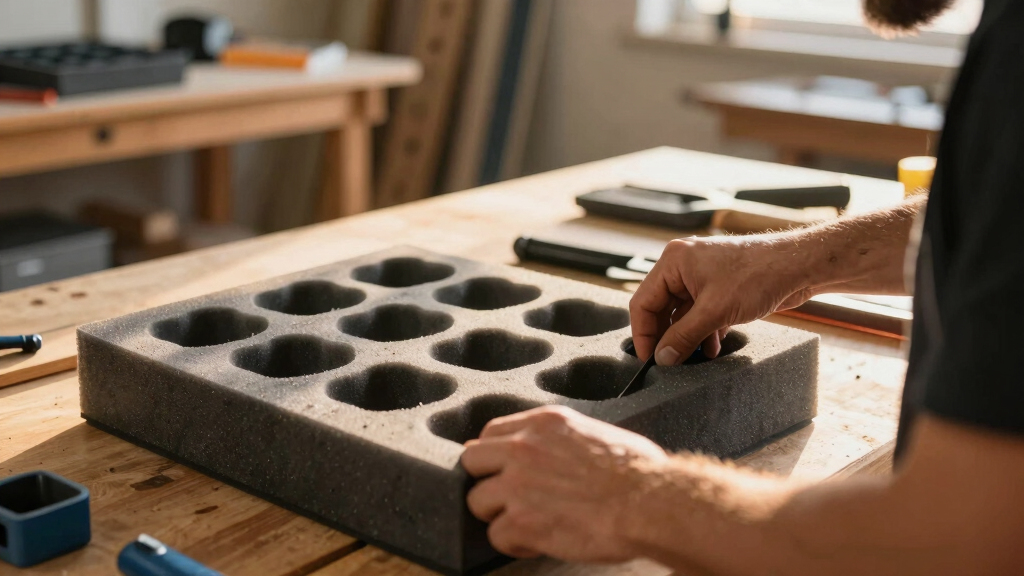
Foam tool organizer inserts are custom-cut or pre-made foam pieces designed to hold tools securely in place. They act like a cushioned skeleton, cradling each tool to prevent scratches, dents, or accidental drops. For example, a mechanic might use a foam insert with cutouts for wrenches, screwdrivers, and pliers, so everything stays put during transport or storage.
These inserts matter because they:
- Protect tools from damage caused by knocking or jostling.
- Save time by making tools easy to find at a glance.
- Extend tool lifespan by reducing wear and tear.
Think of foam inserts as the soft armor for your tools — durable, lightweight, and tailored to your needs.
custom foam tool organizer inserts
As an affiliate, we earn on qualifying purchases.
As an affiliate, we earn on qualifying purchases.
The Main Types of Foam Inserts and When to Use Each
Foam inserts come in several varieties, each suited to different needs. Knowing the differences helps you choose what fits your tools and workflow best.
Here’s a quick breakdown:
| Type | Features | Best For |
|---|---|---|
| Pre-cut Foam | Factory-cut shapes, ready to drop in | Standard tools, quick setup |
| DIY/Custom Foam | Cut or shape manually, flexible | Irregular tools, specialized sets |
| EVA Foam | Lightweight, easy to work with, durable | Custom inserts, delicate tools |
| Closed-cell vs. Open-cell | Closed: moisture-resistant; Open: softer cushioning | Outdoor use vs. indoor, delicate tools |
Choosing the right type of foam is crucial because it directly impacts the level of protection, ease of customization, and durability. For example, pre-cut foam offers quick organization but might lack the perfect fit for unique tools, potentially leading to movement that can cause damage over time. DIY foam provides flexibility, allowing you to tailor each cut precisely, which is especially important for delicate or irregularly shaped tools. EVA foam strikes a balance with its lightweight yet durable nature, making it suitable for custom projects where you need to protect fragile items without adding bulk. The choice between closed-cell and open-cell foam involves a tradeoff: closed-cell resists moisture and offers better protection against environmental factors, making it ideal for outdoor or damp environments, while open-cell foam provides softer cushioning suitable for indoor use or delicate tools that require gentle handling.
foam tool storage inserts for mechanics
As an affiliate, we earn on qualifying purchases.
As an affiliate, we earn on qualifying purchases.
Materials That Make Foam Inserts Tough and Protective
The material used for foam inserts determines how well they protect your tools and how long they last. Here’s what you need to know.
- Polyethylene (PE): Hard, impact-resistant, chemical-proof. Perfect for rugged environments. This material provides excellent durability and moisture resistance, making it suitable for outdoor or industrial settings where tools may be exposed to harsh conditions. However, its rigidity can make it less forgiving for delicate tools that require softer cushioning.
- Polyurethane: Soft, flexible, good for delicate tools needing gentle cushioning. Its flexibility allows for a snug fit around fragile items, reducing the risk of damage. But, it’s less resistant to moisture and chemicals, so it’s better suited for indoor applications or protected environments.
- EVA Foam: Lightweight, tough, and easy to cut. A favorite for custom projects. Its balanced properties make it versatile, providing good impact absorption while being easy to shape for specific tool contours. It’s especially advantageous when you need a combination of protection, ease of customization, and weight savings.
Choosing the right material involves considering the environment and the nature of your tools. For outdoor or moisture-prone areas, closed-cell polyethylene foam offers superior water resistance, preventing rust and corrosion. For tools that require soft cushioning or are sensitive to impact, polyurethane or EVA foam may be better choices. The tradeoff often lies in durability versus flexibility, so selecting the material aligns with your specific protection needs and working conditions.
As an affiliate, we earn on qualifying purchases.
Design Tips for Making Your Foam Inserts Fit Like a Glove
Designing your foam insert is about precision. It’s not just about cutting shapes — it’s about creating a secure home for each tool. Here are some tips.
- Measure twice, cut once: Use calipers for exact dimensions of your tools. Precise measurements ensure your foam cutouts hold tools securely, reducing movement that can cause scratches or damage during transport or storage.
- Layer thickness matters: Ensure enough depth so tools sit snugly without wobbling. Proper depth prevents tools from shifting or falling out, maintaining organization and protection over time.
- Label or mark: Use a permanent marker or cutouts to identify tools instantly. Clear labeling minimizes search time and helps keep your toolbox organized, especially when multiple users are involved.
- Leave room for expansion: If you add tools later, plan for some extra space. This foresight allows for future customization without the need to overhaul your entire foam layout, saving time and effort.
For example, a plumber might measure the length of their pipe wrenches and cut foam to match, so each wrench clicks into place perfectly. Proper planning ensures that your foam insert not only fits your current tools but can also accommodate future additions, making your investment more versatile and long-lasting.
As an affiliate, we earn on qualifying purchases.
How to Cut and Customize Foam Inserts Without Messing Up
Cutting foam might sound tricky, but with the right tools and technique, it’s straightforward. Here’s a step-by-step process:
- Gather tools: Use a sharp utility knife, hot wire cutter, or a fine-tooth saw. Sharp tools ensure clean, precise cuts that fit your tools perfectly, minimizing rework and material waste.
- Trace your shapes: Mark outlines with a marker or stencil. Accurate tracing is essential because even small inaccuracies can lead to loose fits or tight, difficult-to-insert tools, affecting protection and usability.
- Cut slowly and evenly: Follow your lines, applying gentle pressure. Rushing can cause uneven edges or tears, compromising the integrity of your insert and potentially damaging your tools or foam.
- Test fit: Place tools in the cutouts, adjust as needed. This step is crucial to ensure a snug, secure fit; it allows you to make fine adjustments before finalizing the design.
- Finish edges: Smooth rough edges with fine sandpaper or a file. Clean edges prevent snagging or tearing during use and give your insert a professional appearance.
For example, customizing a foam insert for screwdrivers might involve cutting elongated slots, which can be made with a hot wire cutter for clean, precise edges. Taking your time and verifying fit at each stage ensures your foam insert provides optimal protection and organization for your tools.
The Big Question: Are Foam Inserts Waterproof or Weather-Resistant?
Most foam inserts are not fully waterproof but can be made moisture resistant depending on the material. Closed-cell foam, like polyethylene, resists water and dust better than open-cell types, which are softer and more absorbent.
For example, if you’re storing tools in a damp garage or outdoor trailer, choose closed-cell foam inserts to keep moisture out and prevent rust. Regular foam, especially open-cell types, can trap moisture over time, leading to mold or corrosion. This can be a significant issue because trapped moisture can accelerate rusting and degrade the foam itself, reducing its protective qualities. To mitigate this, consider sealing your foam with a waterproof coating or storing your tools in airtight containers with desiccants. While foam inserts can provide a degree of moisture resistance, they are not substitutes for waterproof storage solutions in environments with high humidity or direct exposure to water. Opting for closed-cell foam and additional protective measures ensures your tools stay dry and functional in challenging conditions.
Adding a protective sealant or keeping inserts in airtight cases can boost water resistance. But for heavy exposure, consider moisture-proof cases with foam inserts built-in.
How Long Do Foam Tool Inserts Last? When to Replace or Refresh?
Foam inserts typically last between 2 to 5 years, depending on usage, environment, and material quality. Heavy tools or frequent transport can cause wear, tearing, or compression over time. The lifespan is also affected by exposure to moisture, temperature fluctuations, and UV light, which can degrade foam properties and reduce their protective capabilities. Regular inspection is key: look for signs of crumbling, loss of shape, or tools no longer fitting securely. When you notice such issues, it’s time to replace or refresh your insert to maintain optimal protection. Cleaning with compressed air or a gentle vacuum can remove dust and debris, extending the lifespan, but worn or damaged foam needs replacement to prevent tool damage or loss of organization. Planning periodic checks and having spare foam on hand can save you from unexpected tool mishaps and keep your storage system effective.
For example, a construction worker’s foam insert might last 3 years before tools start shifting around, signaling it’s time for a new custom cut. Regular maintenance and timely replacement ensure your tools are always protected and your setup remains organized.
Can You Reuse or Recycle Foam Inserts? Making Them Last and Going Green
Many foam inserts can be reused if they’re still in good shape. Simply clean, re-label, or re-cut for new tools. Recycled foam options are also emerging, made from eco-friendly materials that break down more easily.
Recycling options vary — some local waste programs accept foam, but many don’t. Check with your supplier about recyclable or biodegradable foam choices. Reusing old foam in DIY projects, like lining drawers or creating padding for other storage, is a smart way to cut waste. Reusing foam not only saves money but also reduces environmental impact by extending the life of existing materials. If the foam is too worn or damaged, consider repurposing it for craft or insulation projects instead of discarding it. Opting for biodegradable or recycled foam options when purchasing new inserts can further minimize ecological footprints. By integrating reuse and sustainable materials into your storage practices, you contribute to a greener future while maintaining effective tool organization.
For example, an electrician reuses foam inserts from old cases for organizing spare parts in a new toolbox, saving money and reducing waste.
Frequently Asked Questions
How do I measure my tools for custom foam inserts?
Use a digital caliper or a ruler to measure length, width, and height of each tool. Record these dimensions and add a small margin for easy placement. Accurate measurements ensure your foam cutouts hold tools snugly without excess slack.Can I cut foam with scissors or only specialized tools?
Scissors can work for soft foam, but for cleaner, more precise cuts, a sharp utility knife or hot wire cutter is best. These tools help create smooth edges and detailed shapes, especially for complex or tight-fitting designs.What’s the best way to clean foam inserts?
Gentle vacuuming or compressed air clears dust and debris without damaging the foam. For deeper cleaning, lightly wipe with a damp cloth using mild soap. Avoid soaking or harsh chemicals, which can degrade the foam over time.Are foam inserts suitable for outdoor or rugged environments?
Closed-cell foam, like polyethylene, resists moisture, dirt, and dust, making it suitable for outdoor use. Open-cell foam is softer but less weather resistant, so it’s better suited for indoor or protected environments.Conclusion
Foam tool organizer inserts are more than just padding — they’re the backbone of a well-organized, protected toolbox. When you tailor your inserts to your tools, you cut down on search time, tool damage, and frustration. Take the time to measure, cut, and maintain your foam inserts, and your gear will thank you for years to come.
Remember, a neat, secure setup isn’t just about tidiness — it’s about working smarter, safer, and more efficiently. Your tools deserve a home that fits just right, every time.
Columbus Day / Indigenous Peoples' Day Picks
long weekend sales
As an affiliate, we earn on qualifying purchases.