
TL;DR

Get business pricing on tools and workshop supplies
- Business-only prices and quantity discounts
- Tax-exempt purchasing
- Multiple users, one account, clear invoices
A museum in St. Louis has launched an exhibit that recreates the scents of ancient Rome, using archaeological research and historical analysis. The exhibit aims to give visitors a sensory glimpse into Roman daily life and culture.
The St. Louis Museum of Art has unveiled a new exhibit that allows visitors to experience the scents of ancient Rome through carefully recreated fragrances based on archaeological and historical research. This initiative aims to provide a unique sensory connection to Roman culture and daily life, making it a notable development in both museum curation and historical reenactment.
The exhibit, titled “The Scent of Ancient Rome,” opened on March 15, 2024, and features a series of recreated fragrances inspired by archaeological findings from Roman sites across the Mediterranean. These scents are crafted using natural ingredients that match descriptions from ancient texts and residue analysis from Roman artifacts, according to the exhibit’s curators.
Curators from the museum collaborated with archaeologists and perfumers to develop authentic fragrances that aim to evoke the smellscape of Roman urban and rural environments. The display includes scent stations where visitors can smell recreated fragrances representing markets, baths, homes, and temples, providing a multisensory experience of Roman daily life.
The project is part of a broader effort to incorporate sensory elements into historical exhibitions, which experts say can deepen understanding and engagement with ancient cultures. The exhibit will run through December 2024, with plans for educational programs and guided tours exploring Roman history through olfactory cues.
Why Recreating Roman Scents Matters for Cultural Understanding
This exhibit offers a novel way to connect with history by engaging the sense of smell, which is often overlooked in traditional displays. It provides a tangible link to the past, helping visitors imagine the daily environments of ancient Romans more vividly. Such sensory experiences can enhance educational outcomes and foster a deeper appreciation of Roman culture, architecture, and social life.
Moreover, the project highlights the potential of combining archaeology, chemistry, and perfumery to reconstruct lost aspects of history, opening new avenues for museum curation and public engagement. It may inspire similar initiatives elsewhere, broadening the scope of experiential history.
As an affiliate, we earn on qualifying purchases.
Historical and Archaeological Foundations of the Scent Reconstruction
The idea of recreating ancient Roman scents is rooted in recent archaeological discoveries, including residues found on pottery, oil lamps, and other artifacts that suggest the use of specific herbs, resins, and oils. Scholars have analyzed ancient texts, such as Pliny the Elder’s writings, which describe Roman perfumes and aromatic practices.
In recent years, advances in chemical analysis have enabled researchers to identify organic compounds from excavated materials, providing clues about the ingredients used in Roman fragrances. Historically, Roman society placed a high value on scents, which were used in religious rituals, personal grooming, and social settings, making their olfactory environment an important cultural marker.
The St. Louis exhibit is among the first to attempt a comprehensive sensory recreation based on this scientific and textual evidence, aiming to bring these ancient smells to modern audiences.
“Our analysis of residues from Roman artifacts has allowed us to identify key aromatic compounds, which we then used as a basis for recreating authentic scents.”
— Dr. Lisa Carter, archaeological chemist
As an affiliate, we earn on qualifying purchases.
Uncertainties in Authenticity and Olfactory Experience
While the scents are based on scientific analysis and historical descriptions, the exact aroma profiles of ancient Roman environments remain partly speculative. Variations in ingredient sources and the limitations of chemical residue analysis mean that the recreated fragrances are approximations rather than definitive reproductions.
Additionally, individual perceptions of smell are subjective, and visitors might interpret the fragrances differently. The long-term preservation of these scents and their stability over time is also still being studied.
As an affiliate, we earn on qualifying purchases.
Future Plans for Sensory History Exhibits in St. Louis
Following the success of this exhibit, the museum plans to expand its sensory history initiatives, including interactive displays and workshops on ancient perfumery and aromatherapy. Researchers intend to refine scent recreations further, incorporating feedback from visitors.
There is also interest in collaborating with other institutions to develop similar multisensory experiences for different ancient cultures, potentially broadening the scope of experiential archaeology.
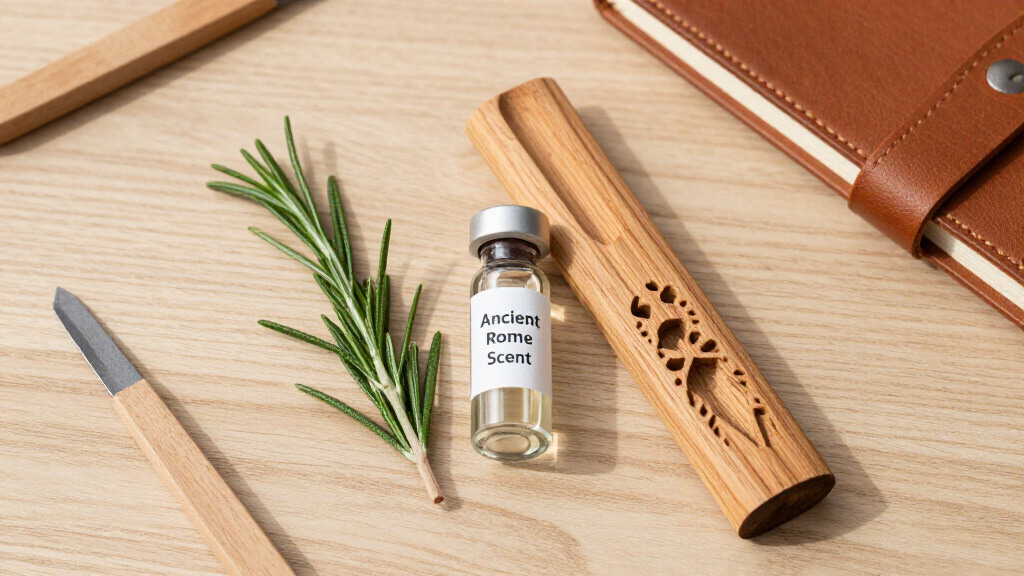
aromatic herbs and resins for perfumery
As an affiliate, we earn on qualifying purchases.
As an affiliate, we earn on qualifying purchases.
Key Questions
How were the ancient Roman scents recreated?
The scents were recreated using chemical analysis of archaeological residues, ancient texts, and modern perfumery techniques to match historical descriptions and residue evidence.
Are these scents exact replicas of what Romans used?
They are approximations based on available scientific and textual data. Exact recreations are challenging due to the limitations of residue preservation and ingredient variability.
Can visitors buy these scents at the museum?
Currently, the scents are only part of the exhibit experience. There are no plans announced yet for commercial production or sales.
Why is smell important in understanding history?
Smell is closely linked to memory and emotion, and it can provide insights into daily life, social practices, and cultural values that are not captured through visuals or texts alone.
Will this exhibit be available for a long time?
The exhibit is scheduled to run through December 2024, with potential extensions or related programs depending on visitor interest and ongoing research.
Source: rss
Fall yard work Picks
leaf blowers
As an affiliate, we earn on qualifying purchases.