TL;DR

Get business pricing on tools and workshop supplies
- Business-only prices and quantity discounts
- Tax-exempt purchasing
- Multiple users, one account, clear invoices
Hunker reported on a YouTube project by WetAndForget that turns matching reclaimed wood pallets into a backyard bar topped with concrete pavers. The design can be made in different lengths, but its cost, load capacity and long-term durability depend on materials and construction; the report does not provide a price or tested weight limit.
A DIY project featured by Hunker shows how YouTube creator WetAndForget turned matching wood pallets into a compact backyard bar with a concrete-paver countertop. The design offers an alternative to buying a ready-made outdoor bar, though the report gives no itemized cost or independently tested capacity for the finished structure.
The project uses at least two same-size pallets in good condition, exterior wood screws, exterior paint with primer, construction adhesive rated for both concrete and wood, and enough pavers to cover the top. The suggested tools include a drill, sander, cleaning cloth, paintbrush and clamps. Hunker describes the bar as suitable for a small patio or a covered entertaining area, with the length adjustable by making and joining additional sections.
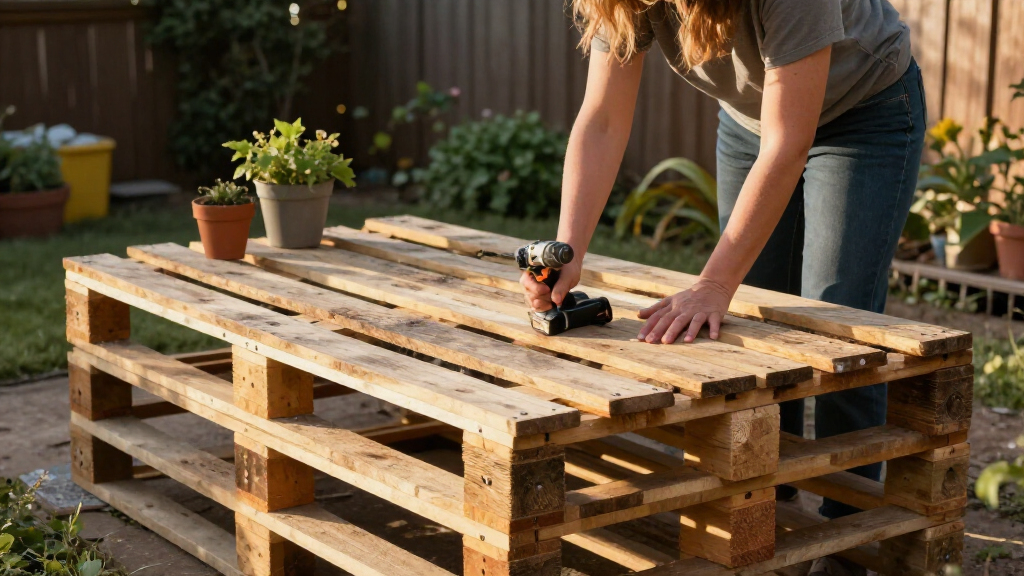
The reported build starts with checking the pallets for rot or contamination and sanding rough edges. After painting and allowing the finish to dry, the builder stands the pallets with their backs together, aligns and clamps them, then fastens their inner boards with exterior screws. The source says WetAndForget used at least three screws per connecting board, while noting that the number may vary.
Before the pavers are attached, the base should sit on level ground and should not rock. The pavers are dry-fitted with minimal overhang, then lifted one at a time while compatible outdoor construction adhesive is applied. Hunker advises waiting until the adhesive is fully dry before putting heavy items on the surface. For a longer bar, it recommends connecting separate pallet units so each section supports its own pavers, rather than leaving pavers across an unsupported gap.
A Lower-Cost Bar With Load Limits
The project may give homeowners a way to reuse pallets instead of purchasing a finished outdoor bar, and it leaves room to match the structure to an existing patio. Hunker says the DIY may cost less than a ready-made option, but it does not give a materials budget or compare prices for a particular store or model. The savings are therefore a possibility, not a verified result.
The paver top also changes the practical demands of the build: concrete adds substantial weight, and the structure must support it without rocking or separating. The report recommends checking the pallet structure and connections before adding the countertop, but provides no tested weight rating. That makes inspection and careful construction more important than appearance alone, particularly if the bar will hold bottles, dishes or other heavy items.
Its custom dimensions and finish can be useful for people with limited space or a specific design in mind. Paint, a stenciled name, hooks, a bottle opener or outdoor LED lights are optional additions described in the report; they are not part of a required structural design.
outdoor wood pallets for DIY projects
As an affiliate, we earn on qualifying purchases.
As an affiliate, we earn on qualifying purchases.
How the Pallet Design Is Assembled
The Hunker report presents the bar as a reuse project rather than a tested commercial product. Its core construction is two pallets fastened together, with concrete pavers adhered across the top. A builder can add a second matching unit beside the first to increase serving space, but the source stresses that each unit should bear its own countertop pavers.
Material condition is central to the instructions: pallets should be sound, clean and free of signs of contamination, while sanding and exterior paint address rough edges and exposure to wet weather. The source does not identify a specific pallet treatment, paint brand, adhesive product or paver size. Those details may affect suitability and performance, so the materials’ labels and the actual dimensions should be checked before assembly.
““at least two same-size pallets in good condition””
— Hunker, reporting on the WetAndForget project
concrete pavers for outdoor countertop
As an affiliate, we earn on qualifying purchases.
As an affiliate, we earn on qualifying purchases.
Cost, Capacity and Durability Unknown
The source does not state how much the completed bar cost, how long construction took, or what weight the design can safely hold. It also does not report independent testing, a long-term outdoor trial or a confirmed load rating for the pallets, fasteners, adhesive or pavers. Hunker’s description that the project could cost less than a ready-made bar is not backed by a listed price comparison.
The appropriate pallets and materials may vary by location and condition. The report does not specify how to identify pallet contamination or treatment, nor does it give dimensions for the pavers or screw length. Readers should not assume that any two pallets or any adhesive will suit the build; the source calls for good-condition wood and adhesive compatible with both concrete and wood. Whether the bar will remain stable in a particular setting depends on the base, connections, ground and total load.
outdoor construction adhesive for wood and concrete
As an affiliate, we earn on qualifying purchases.
As an affiliate, we earn on qualifying purchases.
Check Materials Before Building
Hunker does not report a follow-up test or a scheduled next step from WetAndForget. For anyone considering the design, the immediate steps are to inspect the pallets, select materials suited to outdoor use, and confirm the base is level and stable before attaching pavers. The adhesive should be allowed to dry according to its product instructions before the surface is loaded.
Any decision to extend the bar should account for the weight carried by each separate section, rather than relying on pavers to bridge a gap. Until a specific design has been tested, the project’s capacity and performance over time remain unverified. The source’s optional decorations can be added after the structure is assembled and stable.
exterior wood screws for outdoor furniture
As an affiliate, we earn on qualifying purchases.
As an affiliate, we earn on qualifying purchases.
Key Questions
What materials does the pallet bar project require?
The report lists at least two matching pallets in good condition, concrete pavers, exterior wood screws, exterior paint with primer, and construction adhesive compatible with both wood and concrete. A drill, sander, clamps, paintbrush and cleaning cloth are among the suggested tools.
Can the bar be made longer?
Hunker says a builder can make a second matching pallet unit and connect it side by side. Its guidance is for each section to support its own pavers; it does not provide a tested design or capacity for a longer bar.
How much weight can the finished bar hold?
The source gives no tested weight limit. It warns that pavers add considerable weight and advises checking the pallet structure and connections before installing them. The safe capacity will depend on the actual materials and assembly.
Does the report confirm that this project costs less than a store-bought bar?
No itemized budget or price comparison is supplied. Hunker says the project could cost less than purchasing a ready-made bar, but the actual cost will depend on the pallets, pavers, adhesive, paint and other materials.
Source: rss
Halloween Picks
halloween
As an affiliate, we earn on qualifying purchases.