
TL;DR

Get tools and workshop supplies delivered free — and shop member deals
- Fast, free delivery on millions of items
- Access to Prime Big Deal Days deals on October 6–7
- Prime Video, Amazon Music and more included
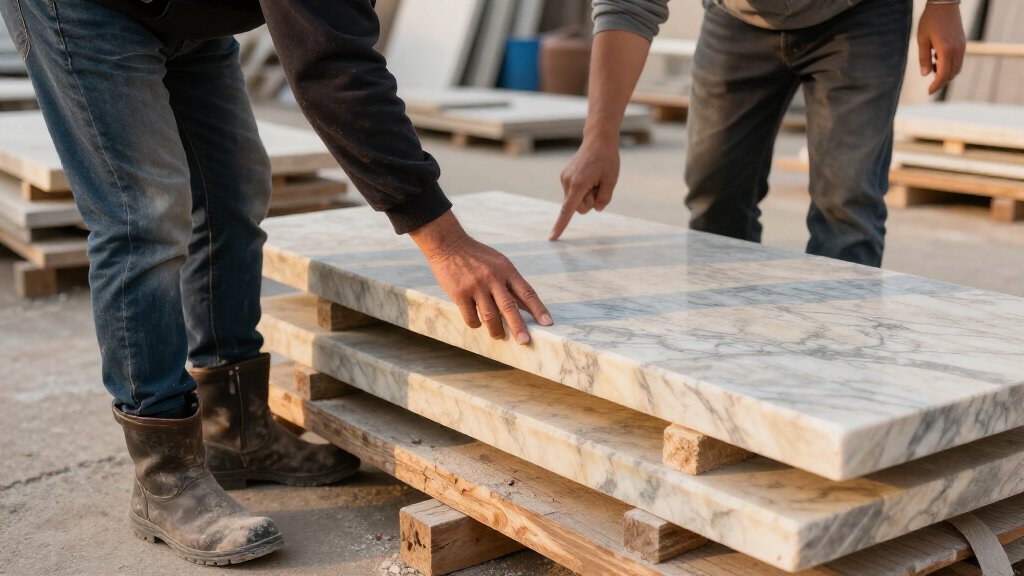
A Livingetc article highlights how visiting a local stone yard can help renovators find marble and other stone offcuts for smaller home projects. Designers cited in the report describe using remnants for floor repairs, shelves, mirror trims and architectural details, though availability, costs and suitability vary by yard and material.
Livingetc has reported on homeowners and designers using stone-yard offcuts—leftover pieces from larger projects—for renovation details such as shelves, windowsills, floor repairs and decorative features. The approach offers a way to bring natural stone into a home without buying a full slab, although the source does not provide price comparisons or quantify its environmental impact.
The report’s author recommends contacting or visiting a local stone yard to ask about remnants. Stone yards often cater primarily to trade customers, the article says, but may also serve homeowners; it advises calling ahead if access or sales arrangements are uncertain. Offcuts can be small or unusually shaped, and their selection depends on what remains from other jobs.
Examples in the article show a range of uses. Melbourne designer Shona McElroy of SMAC Studio used marble remnants for floating shelves and mirror trims in a small bathroom. In a renovation by Australian firm Other Architects, assorted marble pieces were used to patch areas of a floor rather than resurfacing the entire apartment, according to director Grace Mortlock.
Other projects featured include marble incorporated into bespoke joinery by Sally Caroline, and a bold stone detail in an entryway designed by Alexander & CO. The author also says they have used offcuts for shelves, windowsills, kitchen-island counters and coffee tables, in materials including granite, travertine, quartz and marble. These are examples from the report, not a guarantee that every yard stocks the same materials or can cut them to a particular specification.
Small Remnants, Practical Design Options
Buying an offcut may let a renovator use natural stone in a limited area without sourcing enough material for a large counter or wall. The examples also show how a remnant can serve a functional purpose, such as a shelf or repair, while adding a distinct color or pattern. That can make stone accessible to projects with more modest space or material needs, but the article does not establish that offcuts are always cheaper than other options.
The report presents reuse as a way to keep usable stone from being discarded. Its sustainability case is plausible as a reuse strategy, but no waste figures, lifecycle analysis or emissions data are supplied. Practical considerations remain: the piece’s dimensions, condition, finish and suitability for its intended use need to be checked with the yard or a qualified fabricator.
As an affiliate, we earn on qualifying purchases.
How Designers Use Stone Leftovers
The source contrasts dramatic interiors featuring extensive marble surfaces with the more limited use of stone that may suit a real renovation. It notes that natural stone can be expensive and difficult to source, and that some types may not be practical or durable for every application. It does not identify particular stones as unsuitable for specific rooms, so homeowners should seek project-specific advice rather than generalize from the examples.
Designer Sally Knibbs, design director of Sally Caroline, supports using stone sparingly, describing “thoughtfully placed moments” as a way to add depth and contrast. Other Architects’ floor-patching project illustrates a different purpose: rather than treating the repair as invisible, the studio used contrasting marble pieces to make the repaired areas part of the design.
“We believe natural stone can be equally impactful when used with restraint.”
— Sally Knibbs, design director of Sally Caroline
As an affiliate, we earn on qualifying purchases.
Availability, Costs and Suitability Vary
The report does not list specific stone yards, current prices, typical savings or the availability of particular remnants. It also does not establish whether a yard will sell directly to an individual homeowner, cut a piece to size or deliver it. Those details can differ by supplier and should be confirmed before a project is planned around a particular offcut.
The article’s sustainability framing is based on reusing leftover material, but it provides no measured environmental comparison with newly sourced stone or other finishes. Nor does it offer technical guidance on installation, sealing or structural suitability. The appropriate material and fabrication method depend on the intended use and the specific stone.
travertine stone offcuts for bathroom
As an affiliate, we earn on qualifying purchases.
As an affiliate, we earn on qualifying purchases.
Questions to Ask Before Buying
For a homeowner considering this approach, the next step is to contact nearby yards and ask whether they sell remnants to the public, what pieces are currently available, and whether cutting or delivery can be arranged. Bring measurements and explain the intended use; confirm the piece’s condition, finish and any preparation or installation requirements before purchase.
The source reports no scheduled follow-up, new policy or broader industry development. Any cost or waste benefit will depend on the individual project, the stone selected and how much fabrication is needed.
As an affiliate, we earn on qualifying purchases.
Key Questions
What is a stone-yard offcut?
An offcut is a leftover piece of stone from a larger project. It may be small or irregularly shaped, and the available materials depend on what a yard has on hand.
Can homeowners buy directly from a stone yard?
The Livingetc report says yards often focus on trade customers but may welcome homeowners. It recommends calling ahead to check access, sales terms and whether the yard can help with a particular project.
What can marble offcuts be used for?
Examples in the report include shelves, windowsills, mirror trims, floor patches and decorative details. The right use depends on the piece’s size, condition and suitability for the application.
Are offcuts always cheaper or more sustainable?
The report presents reuse as a way to use leftover stone, but gives no price comparisons or environmental measurements. Costs and environmental effects depend on sourcing, fabrication, transport and the alternative material.
Source: rss
Fall Picks
fall essentials
As an affiliate, we earn on qualifying purchases.