

This checklist is for DIY woodworkers building a practical hand tool kit, whether you are setting up a bench or filling a few gaps. It focuses on tools used to cut, shape, mark, and clean up wood, with picks for the sections that name a product.

Get business pricing on tools and workshop supplies
- Business-only prices and quantity discounts
- Tax-exempt purchasing
- Multiple users, one account, clear invoices
The sections follow common workshop tasks: chiseling, sawing, planing, marking, scraping, and brushing. Product names identify the listed picks; the advice sections cover what to consider when choosing a cabinet scraper or bench brush.
Use the checklist to match each tool to your projects and work habits. Check dimensions, intended cuts, handle comfort, and compatibility with your existing setup before buying, and prioritize the tools that address a real need at your bench.
Woodworking Chisels
A chisel set supports fine trimming and cleanup around joints, corners, and other details where a saw or plane may not reach. A set can cover several common widths, but the product name alone does not specify the sizes included, so check the listing against the work you expect to do. The Kirschen 6-Piece Chisel Set with Wooden Box is the pick for this slot.
A common mistake is choosing a set based only on the number of pieces or its storage box. Check the blade widths and handle design, and consider whether the chisels suit hand pressure, mallet use, or both. Confirm that the sizes complement any chisels you already own instead of duplicating them. If you mainly work on small joinery, prioritize useful narrow sizes; for broader paring tasks, consider whether the set includes widths appropriate to your stock and joints.
Before buying, review how the set is stored and whether the box fits your workspace. Chisels need safe organization and accessible edges. Choose a set whose listed sizes and handling match your projects, and plan for regular edge care as part of using chisels well.
What to look for:
- Check the listed width of each of the six chisels.
- Match the included sizes to your joinery and stock.
- Consider handle comfort for controlled paring and mallet work.
- Check that the wooden box fits your storage space.
- Look for clear care and edge maintenance guidance.
Kirschen 6-Piece Chisel Set with Wooden Box

This set includes six short-pattern chisels with beveled edges and hornbeam handles, stored in a fitted wooden box. The forged carbon steel blades are hardened to 61° Rockwell for strength and edge retention.
Pros:
- Six commonly used chisel sizes
- Forged carbon steel blades hardened to 61° Rockwell
- Hornbeam handles fitted to blade size
- Fitted wooden storage box
Cons:
- Short-length pattern may not suit every task
Best for: Woodworkers who want several chisel sizes together
Not ideal for: Anyone needing one specific width only
Bottom line: Check the included widths and handle details to make sure this set suits your projects.
Japanese Pull Saw
A pull saw is suited to controlled hand sawing, and this pick is named for rip cuts, dovetails, and fine joinery. The Temple Tool Co. Japanese Pull Saw for Rip Cuts, Dovetails, and Fine Jo is the listed choice. Since the product name is truncated, confirm the full listing and its intended cuts before deciding it fits your needs.
One buying mistake is assuming every Japanese-style saw handles every cut equally well. Check the cut types and blade dimensions in the product details, and compare them with the thickness and grain direction of the wood you usually work. For dovetails, pay attention to whether the saw is intended for fine joinery; for rip cuts, make sure the listing specifically describes that use. Also consider the handle length and how comfortably you can control the saw through the strokes your projects require.
Compatibility here means matching the blade and intended cut to your material and workspace, not assuming a universal fit. Review the full product description for details that are absent from the short name. A saw that suits your usual cut work is easier to use consistently than one selected by label alone.
What to look for:
- Verify the full product name and listing details.
- Check whether the saw is specified for rip cuts and dovetails.
- Compare blade dimensions with your typical stock thickness.
- Consider handle length and control for your working position.
- Confirm the cut style matches your projects.
Temple Tool Co. Japanese Pull Saw for Rip Cuts, Dovetails, and Fine Joinery

This Japanese pull saw has 18 TPI rip teeth for dovetails, tenons, and other fine joinery in soft or hardwood. Its lightweight, narrow-kerf Japanese steel blade cuts on the pull stroke, while the wingnut wood handle and brass components add comfort and durability.
Pros:
- Designed for precise dovetails, tenons, and fine joinery
- Pull-stroke design supports a narrow kerf and smooth cuts
- Japanese steel blade is described as sharp and long-lasting
- Ergonomic wood handle with brass components
Cons:
- Rip teeth are specialized for cutting with the grain
- No blade length is specified
Best for: Woodworkers doing hand cut joinery and rip work
Not ideal for: Anyone whose projects need a different cut style
Bottom line: Confirm the full listing and intended cuts before choosing this saw.
Block Plane
A block plane can help with small trimming and edge work, where a larger plane may feel cumbersome. The listed pick is the Precision Low Angle Wood Block Plane. Its name identifies a low-angle design, but details such as dimensions, adjustment method, and blade width should be checked in the product listing.
A common mistake is buying a plane without considering the scale of the work or the way it will be held. Check the plane’s overall size and grip against your hands and the edges you expect to trim. Review how the blade is adjusted and secured, and whether the plane’s dimensions suit your workbench setup. If you plan to use it on end grain or for general edge cleanup, confirm that the listing describes uses compatible with those tasks rather than relying on the name alone.
Also consider how you will maintain and store the plane. Blade access and adjustment can affect routine sharpening and setup, so look for clear product information. Match this pick to the scale of your fitting work and the level of adjustment you want at the bench.
What to look for:
- Check overall dimensions and blade width.
- Review the blade adjustment and securing method.
- Match the size to your hand and intended work.
- Confirm listed uses align with your trimming tasks.
- Consider blade access for maintenance and storage.
Precision Low Angle Wood Block Plane
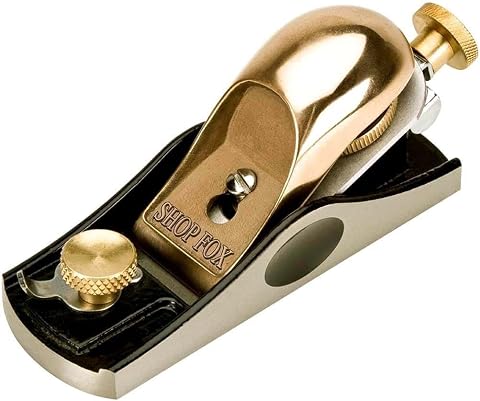
This woodworking tool is designed for precise low-angle planing, ideal for fine finishing and detailed work on wood surfaces. It features adjustable components for accuracy and ease of use.
Pros:
- Provides precise control for detailed woodworking tasks
- Adjustable components for accuracy
- Suitable for fine finishing
Cons:
- Limited information on materials and size
- No user reviews available
- May require additional tools for optimal use
Best for: Woodworkers trimming edges and small areas
Not ideal for: Anyone who needs a larger plane for broad surfaces
Bottom line: Check the dimensions and adjustment details against the work you plan to do.
Marking Gauge
A marking gauge helps lay out consistent lines from an edge before cutting or fitting a joint. The pick is the Taytools Solid Brass Wheel Woodworking Precision Marking and Cutting G. The product name is truncated, so confirm the complete listing and how its marking or cutting element is described.
One common mistake is overlooking the range and adjustment of the gauge. Check the maximum marking distance and whether it suits the width of your stock. Review how the fence is adjusted and locked, since a stable setting matters when repeating a line across multiple pieces. The name mentions a wheel and cutting, but verify the intended use and construction details in the listing rather than inferring performance from the label.
Think about compatibility with your layout routine: the gauge should be comfortable to set, hold against an edge, and readjust for your typical work. Check the materials and contact surfaces described, and consider whether the gauge’s scale and controls are practical for your bench. Choose based on the stock sizes and layout tasks you actually handle.
What to look for:
- Confirm the full product name and description.
- Check the maximum marking distance.
- Review how the fence adjusts and locks.
- Verify the intended role of the wheel or cutting element.
- Match the gauge’s range to your usual stock widths.
Taytools Solid Brass Wheel Woodworking Precision Marking and Cutting Gauge with

This is a high-quality marking and cutting gauge designed for precise woodworking joints. Made of solid brass with a hardened steel cutter, it features micro-adjustment and comes with two additional cutters for versatile use.
Pros:
- Durable solid brass construction
- Precise micro-adjustment with lockable head
- Includes two extra cutters for extended use
- Hardened steel cutter slices easily across wood grain
Cons:
- May be more expensive than plastic alternatives
- Requires some familiarity for optimal adjustment
Best for: Woodworkers marking repeat lines from stock edges
Not ideal for: Anyone whose stock exceeds the gauge’s range
Bottom line: Verify the full product details and marking range before buying.
Cabinet Scraper
A cabinet scraper is useful to consider for surface refinement and cleanup when choosing a hand tool for your bench. No product is specified for this slot, so focus on the shape, thickness, and handling that fit your work rather than selecting by a brand name alone. Think about whether you need a scraper for broad surfaces, tighter spots, or both.
A frequent buying mistake is choosing a scraper without checking its dimensions or how it will be held. Review the blade size and flexibility described by the seller, and consider whether you can control it comfortably over your typical work area. If you are comparing different shapes, match them to the surfaces and corners you need to reach. Check whether the listing includes any holder or handle, or whether the scraper is supplied as a blade alone; that affects how you will use and store it.
Fit also means matching the tool to your finishing routine. Consider how the edge will be prepared and maintained, and whether the scraper can be stored safely with your other sharp tools. Choose a form that feels manageable for the areas you need to smooth and can be maintained with your current sharpening setup.
What to look for:
- Match blade shape to the surfaces and corners you work on.
- Check the scraper’s dimensions and stated flexibility.
- Confirm whether a holder or handle is included.
- Consider grip and control for the size of your work area.
- Review edge preparation and maintenance needs.
Bench Brush
A bench brush can support routine bench cleanup by helping clear loose debris from the work area. No specific product is listed, so choose based on the space you work in and the kind of cleanup you need. Consider whether you want a brush mainly for the bench surface or for reaching into small areas around tools and workpieces.
A common mistake is overlooking bristle length and handle size. A brush that is too large for your bench may be awkward around tools, while one that is too small may not suit broad cleanup. Check the product dimensions and the stated bristle material, then consider how the brush will feel in your hand and where it will be stored. If you work in a compact space, pay particular attention to the overall length and how easily the brush can be kept within reach.
Think about the surfaces you will sweep and whether the brush seems suited to that routine. Review how the bristles are attached and whether the handle has a hanging feature or needs a dedicated storage spot. Pick a brush that fits your bench layout and cleanup habits, and keep it accessible so cleanup can be part of finishing each task.
What to look for:
- Check brush width and overall length against your bench.
- Review the stated bristle material and attachment.
- Consider handle comfort and reach for your workspace.
- Confirm how the brush can be stored or hung.
- Match the brush to the surfaces and debris you routinely clear.
Build the kit in a need-first order: start with the tools that address work you do now, such as chiseling, sawing, or marking, then add planing and cleanup tools as your projects call for them. Check each tool’s dimensions, intended use, and fit with your workspace before choosing.
A useful hand tool checklist grows with your projects. Pick tools that match your stock and working habits, keep them maintained and organized, and add deliberately as new tasks arise.