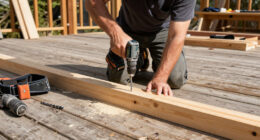
Workshop table saws vary most in rip capacity, portability, and how much support they provide for larger stock. My best overall pick is the DEWALT DWE7491RS, whose rolling stand and generous rip capacity suit a flexible workshop. The SKIL SPT99-11 stands out for buyers who prioritize a worm-drive design and heavy-duty work, while the DEWALT DWE7485 is a more compact choice for shops short on space. The main tradeoff is between a larger 10-inch saw and better handling or storage from compact models. Read on for the full comparison and guidance on choosing by workload, workspace, and support needs.

Get business pricing on tools and workshop supplies
- Business-only prices and quantity discounts
- Tax-exempt purchasing
- Multiple users, one account, clear invoices
Complete the kit


Key Takeaways
- Large-stock capacity favors the DEWALT DWE7491RS and DWE7491X: their 10-inch format and wide rip capacity are better suited to sheet goods than the compact 8¼-inch saws.
- A stand changes day-to-day usability: rolling or folding options on several DEWALT, SKIL, and Evolution models help when a saw must move between storage and the work area.
- Compact saws are a space tradeoff, not just smaller versions: the DEWALT DWE7485 and SKIL TS6308-00 are easier to store but offer less blade and capacity than 10-inch choices.
- The SKIL SPT99-11 serves a different priority: its worm-drive design targets demanding cutting work, while many other picks emphasize portability and general workshop use.
- Included support and accessories matter: some models include stands or a dado plate, while the DOVAMAN is listed without a stand, so buyers should account for setup needs beyond the saw itself.


| workshop table saw | Motor | Blade diameter | Rip capacity | Weight |
|---|---|---|---|---|
| DEWALT 10-Inch Jobsite Table S | 15 A | 10 in | 32½ in | 87 lb |
| DEWALT 15 Amp 8-1/4-Inch Compa | 15 A | 8¼ in | 24.5 in | 54 lb |
| Prostormer 10-Inch Table Saw w | 15 A | 10 in | — | — |
| Evolution R10TBLX 10-Inch Jobs | 15 A | 10 in | 26 in | — |
| DEWALT 10-Inch Jobsite Table S | 15 A | 10 in | 32½ in | 110 lb |
| SKIL 15-Amp 8¼-Inch Compact Po | 15 amp | — | 24.5 inches right; 12 inches left | 40 pounds |
| MarvTool 10-Inch Portable Tabl | 15 amp | 10 inches | — | 28.3 pounds |
| SKIL 10-Inch Heavy-Duty Worm D | — | 10 inches | 30½ inches | 94.3 pounds |
| DOVAMAN 15A Portable Table Saw | 15 amp, 1800 watts | 8.5 inches | — | 50 pounds |
| SKIL 15-Amp 10-Inch Jobsite Ta | 15 amp | 10 inches | 25.5 inches | 51.2 pounds |
| Evolution R10TS 10-Inch Portab | 15A | 10 inches | 26 inches | — |
More Details on Our Top Picks
DEWALT 10-Inch Jobsite Table Saw with Scissor Stand (DWE7491X)
For a workshop that needs to rip wide panels without committing to a heavier rolling base, the DEWALT DWE7491X makes a strong case. Its 32½-inch rip capacity matches the larger DWE7491RS, while the rack-and-pinion fence helps keep width changes quick and controlled. The flip-over fence also gives narrow cuts and stock support more flexibility than a basic fence setup. Its scissor stand is designed for straightforward setup and breakdown, but this saw still weighs 87 pounds, so moving it is not effortless. Compared with the DWE7485, it offers a full 10-inch blade and more room for wide material, at the cost of a larger, heavier package. The vacuum-connected dust port also means dust collection requires extra equipment.
Pros:- 32½-inch rip capacity accommodates wide panels and shelving stock.
- Rack-and-pinion fence supports fast, repeatable adjustments.
- Flip-over fence assists with narrow rips and material support.
- Scissor stand folds for setup and storage.
Cons:- At 87 pounds, it is cumbersome for frequent lifting and transport.
- The 2½-inch dust port needs a compatible vacuum for extraction.
Best for: Workshop owners who regularly rip wide plywood or hardwood and want a full-size blade with a fold-away stand.
Not ideal for: Anyone who needs to carry a saw frequently or expects dust collection without connecting a shop vacuum.
- Motor:15 A
- Power:120 V corded electric
- Blade diameter:10 in
- Rip capacity:32½ in
- Included blade:24-tooth carbide
- Dust port:2½ in
- Weight:87 lb
- Included stand:Scissor stand
Our verdict“Choose the DWE7491X for wide-stock workshop work when you want a 10-inch blade and folding stand more than easy carrying.”
DEWALT 15 Amp 8-1/4-Inch Compact Portable Jobsite Table Saw (DWE7485)
The DEWALT DWE7485 is the space-conscious choice here: its 22.75 × 22.75 × 13-inch form and 54-pound weight are easier to store and reposition than the DWE7491X or rolling-stand DWE7491RS. It still offers a 24.5-inch rip capacity, enough for ripping 4×8 sheet goods, and its rack-and-pinion fence makes adjustments less fiddly than on many compact saws. The tradeoff is the 8¼-inch blade, which gives up cut depth compared with the 10-inch models in this lineup. Onboard storage is useful in a small workshop because the fence and safety accessories have designated places. I’d choose it for portability and footprint, not for heavy-duty work that routinely demands the deeper cut of a full-size saw.
Pros:- Compact dimensions and 54-pound weight ease storage and repositioning.
- 24.5-inch rip capacity accommodates 4×8 sheet goods.
- Rack-and-pinion fence supports smooth, accurate width adjustments.
- Onboard storage keeps guards, fence, and tools organized.
Cons:- The 8¼-inch blade offers less cutting depth than the 10-inch saws here.
- Corded operation requires a nearby power source.
Best for: Home workshop owners with limited floor or storage space who still need to break down full-size sheet goods.
Not ideal for: Buyers who regularly cut thick stock and need the deeper capacity of a 10-inch table saw.
- Motor:15 A
- Power:120 V corded electric
- Blade diameter:8¼ in
- Speed:5,800 rpm
- Rip capacity:24.5 in
- Weight:54 lb
- Dimensions:22.75 × 22.75 × 13 in
- Fence:Rack-and-pinion telescoping
Our verdict“Pick the DWE7485 when workshop space and portability matter more than full-size blade depth.”
Prostormer 10-Inch Table Saw with Stand
The Prostormer 10-Inch Table Saw suits a workshop that wants an adjustable blade angle and a supplied stand without focusing on the large-panel capacity of the DEWALT DWE7491X. Its 15-amp, 1,800-watt motor runs at a listed 5,000 rpm, and the blade adjusts for bevel cuts from 0 to 45 degrees. That gives hobby projects more angle options than a saw used only for square cuts. A blade guard, push stick, metal supports, and storage for small accessories cover practical setup needs, while the dust port lets the owner connect a collector. Unlike the Evolution R10TBLX, it is not described as cutting multiple material types or including a wheeled stand. The listed information also gives no rip capacity, making it harder to judge for wide sheet work.
Pros:- 10-inch carbide blade supports general workshop cutting.
- Adjusts for bevel cuts from 0 to 45 degrees.
- Includes a blade guard and push stick.
- Metal supports and a dust-collector port add practical setup options.
Cons:- Dust collector is not included.
- No rip-capacity figure is provided in the product data.
Best for: Hobby woodworkers seeking a 10-inch saw for general cuts and occasional bevel work, with a stand included.
Not ideal for: Buyers who need a documented wide rip capacity, included dust collector, or specialized multi-material cutting.
- Motor:15 A
- Power:120 V corded electric
- Wattage:1,800 W
- No-load speed:5,000 rpm
- Blade diameter:10 in
- Blade teeth:24
- Bevel range:0–45°
- Dimensions:22 × 23 × 33 in
Our verdict“Choose the Prostormer for basic 10-inch workshop cutting with bevel adjustment, but look elsewhere for proven wide-panel capacity.”
Evolution R10TBLX 10-Inch Jobsite Table Saw with Wheeled Stand
Most saws here are centered on wood; the Evolution R10TBLX stands apart with a tungsten carbide-tipped blade listed for wood, mild steel, aluminum, and composites. That makes it a better fit for a mixed-material workshop than the DEWALT DWE7491RS, whose appeal is its much wider 32½-inch rip capacity. The Evolution offers 26 inches of rip capacity, a 10-inch blade, and a 0–45-degree bevel range, along with a dado plate, zero-clearance throat plate, and cross-cut sled. Its collapsible wheeled stand and outfeed support help with moving and handling stock, while an electronic blade brake, riving knife, and anti-kickback pawls add safety features. The tradeoff is less rip width than the DEWALT wide-capacity models, and it still needs a corded power source.
Pros:- Listed for cutting wood, mild steel, aluminum, and composites.
- Includes dado and zero-clearance plates plus a cross-cut sled.
- Collapsible wheeled stand supports transport and storage.
- Electronic blade brake, riving knife, and anti-kickback pawls are included.
Cons:- 26-inch rip capacity is narrower than the DEWALT DWE7491X and DWE7491RS.
- Corded operation limits use to locations with a suitable power source.
Best for: Workshop owners who cut wood alongside mild steel, aluminum, or composites and value included specialty accessories.
Not ideal for: Buyers whose main task is ripping very wide panels or who need a cordless saw.
- Motor:15 A
- Power:1,800 W corded electric
- Blade diameter:10 in
- Blade teeth:40
- Rip capacity:26 in
- Maximum cut depth:3⅜ in
- Bevel range:0–45°
- Stand:Collapsible wheeled stand
Our verdict“Choose the R10TBLX when material versatility and included workshop accessories matter more than maximum rip width.”
DEWALT 10-Inch Jobsite Table Saw with Rolling Stand, 15 Amp, 4800 RPM, 32-1/2-Inch Rip Capacity (DWE7491RS)
If a workshop needs wide ripping capacity but the saw also has to roll between storage and the work area, the DEWALT DWE7491RS is the strongest match in this group. Its 32½-inch rip capacity equals the DWE7491X, while the rolling, foldable stand is designed to make setup and breakdown easier. The 10-inch blade cuts to a listed 3⅛ inches at 90 degrees, and the rack-and-pinion fence supports fast, controlled adjustments. Compared with the smaller DWE7485, it handles wider stock and offers more blade depth, but its 110-pound weight makes rolling preferable to lifting. Onboard storage keeps the included accessories close at hand. Dust extraction depends on attaching a vacuum to the 2½-inch port, so this is not a self-contained dust solution.
Pros:- 32½-inch rip capacity supports wide panels and shelving stock.
- Rack-and-pinion fence enables quick, controlled adjustments.
- Rolling foldable stand assists with moving and storing the saw.
- Onboard storage keeps the fence and included accessories accessible.
Cons:- At 110 pounds, it is a poor fit for frequent lifting or carrying.
- Dust extraction requires a compatible vacuum connected to the 2½-inch port.
Best for: Woodworkers who routinely rip wide boards or sheet goods and need a rolling stand to move the saw around a workshop.
Not ideal for: Buyers who must lift a saw into a vehicle often or need a compact, lightweight benchtop model.
- Motor:15 A
- Power:Corded electric
- Speed:4,800 rpm
- Blade diameter:10 in
- Rip capacity:32½ in
- Cutting depth at 90°:3⅛ in
- Dust port:2½ in
- Weight:110 lb
- Stand:Rolling, foldable
Our verdict“Choose the DWE7491RS for wide workshop cuts and rollable mobility, provided its weight is manageable for your setup.”
SKIL 15-Amp 8¼-Inch Compact Portable Jobsite Table Saw, TS6308-00
For a workshop where storage and portability matter more than deep cuts, the SKIL TS6308-00 offers a useful middle ground: its 40-pound body and compact 8¼-inch blade are easier to stow than the larger SKIL TS6307-00, while rack-and-pinion fence rails help maintain parallel alignment during rip cuts. The 24.5-inch right-side capacity handles many sheet-good breakdown tasks, though the 2½-inch maximum cut depth limits thicker stock compared with the TS6307-00’s 10-inch blade and 4×4 capacity. Micro-adjustable blade alignment is a welcome feature for repeatable cuts, and the included guard, anti-kickback pawl, and push stick make the package more workshop-ready. The tradeoff is that its stand and vacuum are separate purchases, so setup costs and convenience depend on what you already own.
Pros:- Compact 40-pound design is easier to carry and store than the full-size SKIL TS6307-00.
- Rack-and-pinion fence rails support smooth, parallel fence adjustments.
- Micro-adjustable blade alignment helps with accurate repeat cuts.
- Dust port elbow can connect to a vacuum to direct debris away from the work area.
Cons:- Maximum cutting depth of 2½ inches limits work with thicker stock.
- Folding stand is sold separately, so the saw does not arrive as a complete mobile setup.
- Vacuum for dust collection is not included.
Best for: Small-workshop owners and DIYers who need a portable saw for plywood, trim, and ordinary dimensional lumber, and already have a sturdy bench or compatible stand.
Not ideal for: Buyers regularly cutting thick stock or seeking a ready-to-roll setup; its 2½-inch cut depth is limited, and the folding stand is sold separately.
- Power source:Corded electric
- Motor:15 amp
- Blade size:8¼ inches
- Maximum cutting depth at 0°:2½ inches
- Rip capacity:24.5 inches right; 12 inches left
- Table material:Aluminum
- Weight:40 pounds
- Dust port hose connection:2½ inches
Our verdict“Choose the TS6308-00 for compact storage and accurate everyday cuts, but pick the SKIL TS6307-00 if you need a 10-inch blade and greater cutting depth.”
MarvTool 10-Inch Portable Table Saw, 15-Amp, 4600 RPM
The MarvTool MJT255VC1 pairs a 10-inch blade with a notably light 28.3-pound body, making it the most carry-friendly option here for buyers who want more blade depth than the compact SKIL TS6308-00. Its stated 3.4-inch cut depth at 90 degrees and 0–45-degree bevel range suit a broader mix of stock and angled cuts, while the vacuum-connectable dust port and transparent guard add practical workshop features. That portability comes with a less complete picture for repeat ripping: the supplied details do not list a rip capacity or a rack-and-pinion fence, unlike the SKIL TS6307-00. Its included 36-tooth alloy-steel blade also differs from the carbide blades supplied with the SKIL models. I’d treat it as a lightweight general-purpose option, not the strongest choice for fence-dependent production work.
Pros:- At 28.3 pounds, it is easier to carry than the 40-pound SKIL TS6308-00 and 51.2-pound SKIL TS6307-00.
- 10-inch blade and 3.4-inch maximum cut depth at 90 degrees accommodate thicker stock than the compact SKIL TS6308-00.
- Bevel adjustment covers cuts from 0 to 45 degrees.
- Includes a transparent blade guard and a dust port that can connect to a vacuum.
Cons:- No rip-capacity figure is provided, making sheet-good planning harder.
- The supplied alloy-steel blade is not specified as carbide, unlike the carbide blades included with the SKIL options.
- Requires a corded power source, limiting placement where outlets are unavailable.
Best for: DIYers and mobile repair workers who want a light 10-inch saw for varied wood cuts and occasional bevel work, and do not need a specified wide rip capacity.
Not ideal for: Cabinetmakers or workshop users who rely on repeatable wide rips; no rip-capacity figure or rack-and-pinion fence is specified.
- Power source:Corded electric
- Motor:15 amp
- Speed:4600 rpm
- Blade diameter:10 inches
- Maximum cutting depth at 90°:3.4 inches
- Maximum cutting depth at 45°:2.1 inches
- Blade teeth and material:36-tooth alloy steel
- Weight:28.3 pounds
Our verdict“Pick the MarvTool if low carry weight and a 10-inch blade matter more than documented rip capacity and fence-adjustment features.”
SKIL 10-Inch Heavy-Duty Worm Drive Table Saw with Stand (SPT99-11)
When workshop work means thick stock and wide panels, the SKIL SPT99-11 makes a stronger case than the more portable SKIL TS6307-00. Its worm drive power train is designed for high torque, and the 3⅝-inch depth of cut plus 30½-inch rip capacity give it room for cuts that exceed the smaller saw’s 4×4 capacity and 25.5-inch rip limit. The rack-and-pinion fence helps make width changes more controlled, while the rolling stand, outfeed support, and left support are useful when handling larger workpieces alone. The compromise is substantial weight: at 94.3 pounds, it is movable on its stand but not an easy saw to lift into a vehicle or reposition by hand. It also needs a corded outlet, so this is best as a mobile shop saw rather than a grab-and-go tool.
Pros:- Worm drive power train provides a high-torque design for demanding cuts.
- 30½-inch rip capacity exceeds the SKIL TS6307-00’s 25.5-inch capacity.
- Rack-and-pinion fence supports controlled, smooth adjustments.
- Rolling stand with outfeed and left supports helps handle larger materials.
Cons:- At 94.3 pounds, it is difficult to lift and reposition without the stand.
- Corded operation requires access to a suitable power outlet.
- Its larger, heavier setup is less convenient for compact storage than the portable SKIL models.
Best for: Woodworkers who routinely rip wide panels or cut thick lumber and want a wheeled stand with support for larger workpieces.
Not ideal for: Solo users who frequently lift a saw into a vehicle or need a lightweight jobsite tool; this 94.3-pound model is much heavier than the SKIL TS6307-00.
- Blade diameter:10 inches
- Rip capacity:30½ inches
- Depth of cut:3⅝ inches
- Power source:Corded electric
- Wattage:1800 watts
- Blade teeth:24
- Weight:94.3 pounds
- Included support:Rolling stand, outfeed support, and left support
Our verdict“Choose the SPT99-11 for higher-capacity workshop cutting and supported panel handling, not for frequent hand-carrying.”
DOVAMAN 15A Portable Table Saw, 8.5-Inch Blade, Without Stand
The DOVAMAN DTS02M is the dust-minded choice among the compact saws here: its separation system is rated to collect up to 98% of dust and includes a vacuum connector, a useful setup for indoor workshops where cleanup matters. Its soft-start motor is designed to reduce startup shock, and the extendable work surface grows from 48 to 80 cm to give longer pieces more support. Compared with the 8¼-inch SKIL TS6308-00, it offers a slightly larger blade and a 0–45-degree bevel range, but its 60 mm cut depth at 90 degrees remains short of the 10-inch SKIL TS6307-00’s capacity. The 50-pound weight and absent stand also weaken its portability story. I’d choose it for controlled small-shop work and dust management, not for thick stock or a ready-to-use mobile station.
Pros:- Dust separation system is rated to collect up to 98% of dust and includes a vacuum connector.
- Soft-start technology is designed to provide a controlled, lower-vibration startup.
- Extendable work surface supports longer materials.
- Bevel range of 0–45 degrees allows angled cuts.
Cons:- The 60 mm cutting depth at 90 degrees is less than the 10-inch SKIL TS6307-00’s capacity.
- Stand is not included, leaving buyers to supply a bench or separate support.
- At 50 pounds, it is heavier than the SKIL TS6308-00 despite its smaller blade.
Best for: Indoor hobby woodworkers who prioritize dust handling, soft startup, and an extendable support surface for smaller projects.
Not ideal for: Buyers who cut thick lumber or expect a complete portable setup; its 8.5-inch blade limits depth and a stand is not included.
- Power source:Corded electric
- Motor:15 amp, 1800 watts
- Speed:5000 rpm
- Blade diameter:8.5 inches
- Blade teeth:60
- Cutting depth at 90°:60 mm
- Cutting depth at 45°:40 mm
- Work surface extension:48–80 cm
- Weight:50 pounds
Our verdict“Choose the DOVAMAN for dust-conscious small-shop work and adjustable support, but skip it if deep cuts or an included stand are priorities.”
SKIL 15-Amp 10-Inch Jobsite Table Saw with Folding Stand, TS6307-00
For a workshop that needs one saw to cover routine ripping, crosscuts, bevels, and occasional thicker stock, the SKIL TS6307-00 offers the most balanced package in this group. Its 10-inch blade, 25.5-inch rip capacity, and 4×4 cutting capacity give it a clear reach advantage over the compact TS6308-00, while the integrated folding stand makes it more ready to move and store than the stand-free DOVAMAN. Rack-and-pinion fence rails and adjustable blade alignment support accurate setup, and the 0–45-degree bevel range broadens the work it can handle. It gives up the SPT99-11’s wider 30½-inch rip capacity, high-torque worm drive, and larger-workpiece supports, but weighs far less at 51.2 pounds. This is the sensible choice for general workshop versatility without stepping up to a heavy-duty saw.
Pros:- 10-inch blade and 4×4 capacity handle thicker stock than the compact SKIL TS6308-00.
- Integrated folding stand supports storage and movement without a separate stand purchase.
- Rack-and-pinion fence rails and adjustable blade alignment support accurate setup.
- Bevel capacity from 0–45 degrees covers a range of angled cuts.
Cons:- Its 25.5-inch rip capacity is narrower than the SKIL SPT99-11’s 30½-inch capacity.
- Corded operation requires access to a power source.
- Dado cuts require a separate 8-inch dado blade set and dado insert.
Best for: DIY woodworkers and small-shop owners who want a versatile 10-inch saw with an integrated folding stand for regular cuts and occasional transport.
Not ideal for: Users who routinely break down very wide panels or need the SPT99-11’s 30½-inch rip capacity and outfeed support.
- Power source:Corded electric
- Motor:15 amp
- Blade diameter:10 inches
- Rip capacity:25.5 inches
- Bevel capacity:0–45 degrees
- Cutting capacity:4×4 at 90 degrees
- Fence:Rack-and-pinion rails
- Stand:Integrated folding stand
- Weight:51.2 pounds
Our verdict“Choose the TS6307-00 for a capable, stand-included workshop saw; move up to the SPT99-11 if wide-panel capacity and larger-workpiece support matter more.”
Evolution R10TS 10-Inch Portable Jobsite Table Saw with Dado Plate
I’d choose the Evolution R10TS when a workshop needs one portable saw for more than wood. Its included carbide-tipped blade is specified for cutting wood, mild steel, aluminum, and composites, a wider material brief than the DEWALT DWE7491X or SKIL TS6307-00. The 26-inch rip capacity suits many sheet and board tasks, while the rack-and-pinion fence and geared bevel adjustment help keep setup controlled. Its included dado plate, zero-clearance throat plate, and cross-cut sled also give it a broader accessory starting point than a basic jobsite setup.
The tradeoff is capacity: the DEWALT DWE7491RS offers a wider 32-1/2-inch rip capacity, while this saw’s 3-3/8-inch maximum cut depth may rule out some thicker stock. It also needs a corded outlet. I’d favor it for mixed-material flexibility, not maximum rip capacity or cordless mobility.
Pros:- Specified to cut wood, mild steel, aluminum, and composites with the included blade.
- Includes a dado plate, zero-clearance throat plate, and cross-cut sled.
- Dual rack-and-pinion fence and geared bevel adjustment support controlled setup.
- Steel frame includes carry handles, onboard storage, and an outfeed support bar.
Cons:- The 26-inch rip capacity is narrower than the DEWALT DWE7491RS’s 32-1/2-inch capacity.
- The 3-3/8-inch maximum cut depth limits work with some thicker material.
- Corded operation restricts use away from a suitable power outlet.
Best for: Workshop owners who regularly switch between wood, mild steel, aluminum, and composite materials and want a portable saw with useful included accessories.
Not ideal for: Buyers who need to rip especially wide panels, cut stock thicker than its 3-3/8-inch capacity, or work where a corded power source is unavailable.
- Motor:15A
- Power:120V corded electric; 1800W
- Blade diameter:10 inches
- Blade:40-tooth tungsten carbide-tipped
- Rip capacity:26 inches
- Maximum cut depth:3-3/8 inches
- Bevel range:0–45 degrees
- Fence:Dual rack-and-pinion
- Safety features:Electronic blade brake, anti-kickback pawls, quick-release riving knife, and large paddle switch
Our verdict“Choose the R10TS if your workshop benefits from multi-material cutting and included accessories more than maximum rip width or cordless convenience.”

How We Picked
I compared these workshop table saws around the jobs and constraints that shape a real buying decision: blade size and cutting capacity, portability, included stand or support, and the features that affect setup and versatility. I also weighed how each design fits a workshop that may need to store a saw between projects, move it around, or handle larger panels. Because the lineup includes compact 8¼-inch models, 10-inch jobsite saws, and a worm-drive option, I treated those differences as distinct buyer needs rather than ranking every saw by one spec.
The order gives the strongest overall balance to saws that combine useful capacity with practical setup and mobility. Models with more specialized strengths rank well for their intended users, but not above more adaptable picks when their format or setup demands narrow their appeal. A stand, a larger blade, or a specialty feature can add real value, yet none makes a saw the right choice if it does not fit the shop, workpiece size, or storage plan.
Factors to Consider When Choosing Workshop Table Saws
Before choosing among workshop table saws, decide what your shop asks the saw to do on an ordinary workday. The biggest model is not automatically the best fit, and a compact saw can become frustrating if your projects regularly involve wide panels. These broader factors can help you weigh capacity against setup, storage, and the accessories you may need.
Match Blade Size and Rip Capacity to Your Stock
Blade diameter and rip capacity answer different questions: blade size relates to cutting depth, while rip capacity describes how far the fence can position stock from the blade. A larger 10-inch saw is a sensible starting point for mixed workshop projects, but it does not guarantee the support needed for wide sheet goods. Measure the widest pieces you expect to cut, then account for room beside and behind the saw. Buyers often focus on the saw’s listed capacity and forget that handling a large panel safely may require an outfeed table or another person. If your work is mostly narrow trim or smaller parts, a compact 8¼-inch model may save valuable storage space without leaving capacity unused. Choose around your typical work, not an occasional cut that could be handled with a different setup.
Treat the Stand as Part of the Saw
A stand affects where and how reliably you can work, not merely how easily the saw rolls away. Folding stands suit shops where floor space must be reclaimed, while wheeled stands can make frequent moves across a workshop less awkward. A saw sold without a stand may still be a sound choice if you already have a stable bench or plan a fixed installation. Check how the saw will sit at a comfortable working height and whether its support remains steady during feeding. A common mistake is buying for portability without planning where the saw will be stored or how it will be secured during use. Include the stand, work surface, and clearance in your footprint measurements before choosing.
Plan for Sheet Goods and Long Workpieces
Wide panels and long boards need more than a capable motor: they need controlled support before and after the blade. A large rip capacity helps position sheet goods, but it does not remove the need for safe infeed and outfeed space. Map the full path of your longest stock through the workshop, including walls, doors, benches, and stored tools. If space is tight, consider whether a compact saw paired with a dedicated support surface better fits your workflow than a larger saw that is difficult to use in the room. Avoid assuming that a jobsite stand alone will support every large workpiece. The best setup is the one that keeps the stock stable while leaving you room to guide it without awkward reaching.
Decide How Much Portability You Will Actually Use
Portability helps when a saw moves between work zones, gets packed away after each project, or must travel to another site. In a permanent workshop, repeated folding and rolling may matter less than a steady installation and easy access to the fence and controls. Think through the routine: where the saw starts, where it operates, and where it ends each day. Compact models can be easier to lift or store, but their smaller blade and capacity may limit future projects. Larger saws with rolling stands reduce some moving effort, though they still need room to park. Pick the level of mobility your routine calls for rather than treating portability as an automatic benefit.
Check Specialty Needs Before Paying for Features
Special features are useful only when they match work you do often enough to justify the added complexity. A dado-compatible setup, for example, matters to buyers who cut dadoes and grooves, but it may not affect ordinary ripping and crosscutting. Worm-drive designs appeal to buyers seeking a particular powertrain approach, while others may prefer a familiar general-purpose jobsite format. Before paying for a specialty capability, check what additional blade, insert, or setup requirements apply and whether those parts are included. Also verify that the feature works with your planned materials and shop practices. A simpler saw can be the better purchase if it covers your routine cuts with fewer extras to manage.
Budget for the Complete Cutting Station
The saw is only one part of a safe, useful cutting station. A suitable stand, stable infeed and outfeed support, compatible blades, dust collection, and storage can all affect the final setup. Compare what each package includes rather than assuming similarly named saws arrive ready for the same kind of work. Buyers sometimes spend their entire budget on the saw and then improvise unstable support for long stock. Decide which accessories you already own and which are necessary before settling on a model. Paying more for a stand or capacity can make sense if it solves a frequent workflow problem, but unused capability is not a good reason to stretch your budget.
Frequently Asked Questions
Is a 10-inch workshop table saw worth choosing over an 8¼-inch model?
Choose a 10-inch model if your work often involves thicker stock, larger panels, or the broader versatility of a full-size blade. The DEWALT DWE7491RS and DWE7491X pair that format with substantial rip capacity, while compact models such as the DWE7485 and SKIL TS6308-00 are easier to fit into limited storage. A larger blade does not automatically make every cut easier; the saw still needs room and workpiece support. If your projects mainly use smaller parts, a compact saw may be a better match. Base the choice on your regular material and available workspace.
Can I use a table saw without buying a stand?
Yes, if you have a stable, level surface that supports the saw securely and leaves room to feed stock. The DOVAMAN in this lineup is listed without a stand, which may suit a buyer who already has a suitable bench or plans a fixed setup. Do not substitute a narrow or unstable surface simply to save floor space. Check the saw’s mounting arrangement and allow clearance for stock movement and controls. If you need to move the saw often, a compatible stand can make setup and storage much more practical.
Which type of table saw makes the most sense for a small workshop?
A compact saw is a strong fit when storage and floor space are the main limits, particularly if your usual cuts do not demand the capacity of a 10-inch model. The DEWALT DWE7485 and SKIL TS6308-00 are the compact options in this group. Measure the saw’s working footprint, not just its stored size, since long boards need clear space on both sides. A folding or rolling stand may help reclaim room, but only if there is a practical place to store it. If you regularly rip full-width panels, prioritize a workable support plan over the smallest possible saw.
Do I need a dado-compatible saw for general workshop projects?
Most general ripping and crosscutting does not require dado capability, so it should not be a deciding feature unless your joinery plans call for grooves or dadoes. The Evolution R10TS includes a dado plate, giving it a distinct role for buyers who expect that work. Confirm the saw’s allowed setup, compatible blade dimensions, and any additional parts before using a dado stack. If you rarely make those cuts, a more general-purpose option may offer a better fit for your needs. Choose the feature for planned work, not a vague possibility that you may use it someday.
Should I prioritize a rolling stand or a folding stand?
Choose a rolling stand if you expect to move the saw around the workshop frequently or need to roll it between storage and a work area. A folding stand can be useful when the saw must be stored compactly after use, especially if you can lift and position it comfortably. The DEWALT DWE7491RS and Evolution R10TBLX are among the rolling-stand choices, while the SKIL TS6307-00 comes with a folding stand. Think about floor surfaces, storage height, and the effort required to set the saw up. Neither stand style replaces stable support for long or heavy stock.
Conclusion
For the broadest mix of workshop capacity and mobility, my best overall choice is the DEWALT DWE7491RS. The best premium fit for demanding cuts is the SKIL SPT99-11, especially for buyers who specifically want its worm-drive design. For a compact, space-conscious option, I would compare the DEWALT DWE7485 with the SKIL TS6308-00; the former is a strong choice when easy storage matters. Beginners should start by matching a saw to their regular stock and choosing a stable stand and support setup, rather than paying for unused specialty features; the SKIL TS6307-00 is a practical starting point with its folding stand. If your work calls for dadoes, consider the Evolution R10TS, while buyers with an existing bench may find the stand-free DOVAMAN worth comparing. The right pick is the one whose capacity, setup, and storage demands fit the work your shop actually does.