TL;DR

Get business pricing on tools and workshop supplies
- Business-only prices and quantity discounts
- Tax-exempt purchasing
- Multiple users, one account, clear invoices
A Livingetc report describes a renewed presence of preserved flowers embedded in resin across interiors, including a Paris herbal-tea bar and work by designers such as Marcin Rusak. The material’s appeal is linked by creative director Romain Casella to nostalgia and the desire to preserve a moment, though the report does not establish how widespread the trend is.
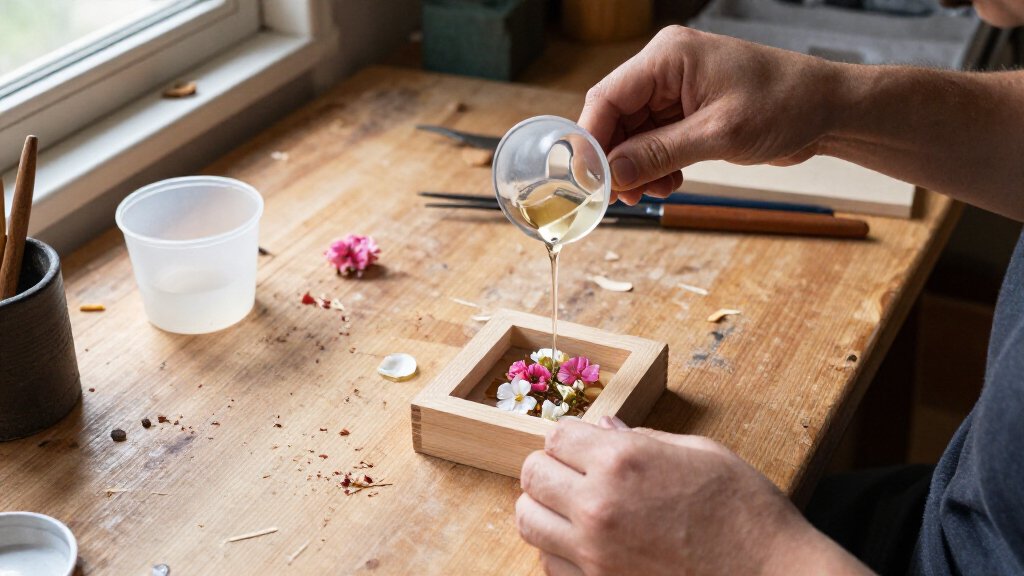
Preserved flowers set in resin are appearing in a range of recent interiors and design projects, according to a Livingetc report that points to a Paris herbal-infusion bar, furniture and lighting as examples. The material, often described as floral epoxy resin, is being presented as a way to turn flowers into lasting decorative objects, though the report offers examples rather than data establishing how widespread the trend is.
One featured example is Apoticari’s La Tisanerie, a herbal-infusion house opened in September in Paris’s Haut-Marais. The report says its floral-enriched resin bar counter reinforces the venue’s botanical identity. The business was founded by Elsa Snakers and is described by Livingetc as Paris’s first dedicated herbal-infusion house.
The report also highlights work by botanical artist and designer Marcin Rusak, whose practice uses plants and flowers in functional objects. Rusak is due to show his Flora Herbarium Clear Amber 152 at Salon Art + Design in New York from November 4 to 8, according to the article. Other examples cited include Monologue x Paraforma’s Gelo side tables and lighting by Austrian designer Laurids Gallée.
Creative director Romain Casella, founder of London- and Geneva-based agency MAY, told Livingetc that the appeal combines nostalgia with a wish to hold time still. He compared the effect to the mosquito preserved in amber in the film Jurassic Park. His comments are an interpretation of the design’s appeal, not evidence of a measured shift in consumer demand.
Why Designers Are Preserving Flowers
Embedding flowers in resin changes them from short-lived natural materials into fixed decorative elements that can be incorporated into tables, counters and lighting. For hospitality venues, a resin feature can also make a botanical theme visible in the architecture rather than limiting it to plants, flowers or printed decoration.
There is a broader design question in the way these objects preserve organic material. Rusak has described flowers as carriers of knowledge, memory and emotion, and said he hopes a work might someday record how people related to nature and beauty in its own time. That is an artist’s stated intention; the report does not show how audiences interpret the objects or whether the approach is changing buying habits.
The examples matter to readers tracking interiors because they connect a material trend to specific public-facing projects and designers, rather than only to product images. They suggest places to watch—hospitality interiors, collectible furniture and lighting—while leaving the scale of the movement open.
Products Worth Considering

Greenworks 40V 8-Inch Cordless Pole Saw with 2.0 Ah Battery and Charger

EGO Power+ 9-Gallon Cordless Wet/Dry Shop Vacuum (WDV0904) with 56V 5.0Ah Battery and Charger

Greenworks 80V Cordless Electric Leaf Blower, 700 CFM, with 2.5 Ah Battery and Charger
As an affiliate, we earn on qualifying purchases.
A Material With Earlier Design Waves
Livingetc says floral epoxy furniture has roots in the 1940s and was revived in the 1980s. The current visibility is therefore described as a return, not the invention of a new technique. The article places the renewed interest alongside broader attention to amber-toned interiors and nostalgia, but does not provide sales figures or a market survey to measure either trend.
The report’s examples span different uses of resin: Apoticari’s bar counter serves as part of a working tea venue, while the Gelo side tables and Gallée’s Node 01 light are presented as design pieces. Rusak’s botanical works add an explicitly archival dimension. Together, the cases show how a similar material can serve commercial interiors, functional objects and artistic practice.
The story is based on Livingetc’s observations of projects and conversations with designers. Its framing that the material is appearing “everywhere” reflects the writer’s experience and editorial judgment; it is not a quantified claim about the number of installations or the rate at which resin designs are being adopted.
““We’re deliberately choosing to freeze time — and there’s something reassuring in that in such unstable times: it doesn’t move; it’s there, still.””
— Romain Casella, founder and director of MAY, speaking to Livingetc
How Broad Is the Resin Revival?
The report does not provide sales data, production figures or a survey showing how common preserved-flower resin has become. Its examples establish that the material appears in several named projects, but not that it is widespread across the interiors industry or gaining at a particular rate.
It is also unclear how long the renewed attention will last, or whether consumers will embrace resin pieces beyond specialist and hospitality settings. Livingetc links the style to nostalgia and amber-toned design, but those connections are presented as editorial interpretation rather than findings from consumer research. The article does not give details about the materials, environmental impacts or preservation methods used in each project.
Upcoming Design Showings to Watch
The next dated event cited in the report is Salon Art + Design, scheduled for November 4–8, 2026, at the Park Avenue Armory in New York. Rusak is expected to bring Flora Herbarium Clear Amber 152 to the fair, offering a near-term opportunity to see how his preserved botanical work is presented to collectors and visitors.
Further evidence of the trend’s reach would require more than individual installations: future coverage, fair presentations and documented market information could show whether the material remains concentrated among a small group of designers or appears in a wider range of interiors. The report does not identify additional confirmed launches or give a timetable for further projects.
Key Questions
What is floral epoxy resin?
It is a design approach in which flowers or other botanical material are embedded in resin to create decorative surfaces or objects. The Livingetc report features examples in furniture, lighting and a hospitality counter.
Where is the material appearing?
The report cites Apoticari’s La Tisanerie in Paris, Monologue x Paraforma’s Gelo side tables and work by designers Marcin Rusak and Laurids Gallée. These are examples, not a complete list of projects using resin.
Is this a new design trend?
Not according to Livingetc, which says floral epoxy furniture dates back to the 1940s and was revived in the 1980s. The current attention is described as a renewed interest in an older approach.
Why are designers using preserved flowers?
Casella told Livingetc that nostalgia and the appeal of freezing a moment in time help explain the material’s attraction. Rusak has described flowers in his work as carriers of memory and emotion. These are the designers’ perspectives, not established conclusions about all buyers.
How widespread is the trend?
The available report identifies several projects but supplies no market data or adoption figures. It supports the conclusion that the material is appearing in named designs, not that it has become widespread across the industry.
Source: livingetc.com