
TL;DR

Get business pricing on tools and workshop supplies
- Business-only prices and quantity discounts
- Tax-exempt purchasing
- Multiple users, one account, clear invoices
Ideal Home contributor and decorator Grace H has shared advice for creating rooms that feel personal rather than uniformly matched. Her suggestions include mixing furniture and metal finishes, adding colour beyond a strict two-shade palette, and using a favourite cushion or artwork to guide choices.
Home decorator and content creator Grace H, writing as a new contributor to Ideal Home’s Open House series, has outlined ways to move beyond coordinated furniture sets and tightly matched colour schemes. Her advice focuses on rearranging existing pieces, mixing finishes and building a palette from objects people already like, rather than buying a complete new room of furnishings.
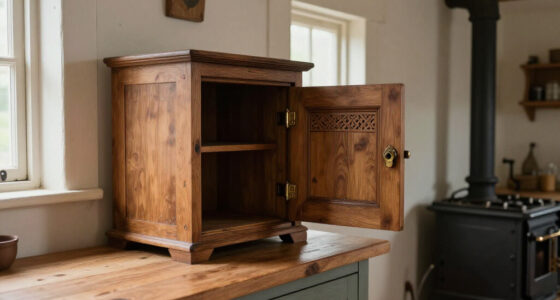
Grace recommends starting with furniture that has been bought as a matching set. Rather than discarding it, she suggests moving pieces between rooms so the same finish or style is not repeated throughout one space. A farmhouse dining table paired with more modern chairs is one example she gives; in a bedroom, she says a chest of drawers in a different material or finish can break up matching bedside tables.
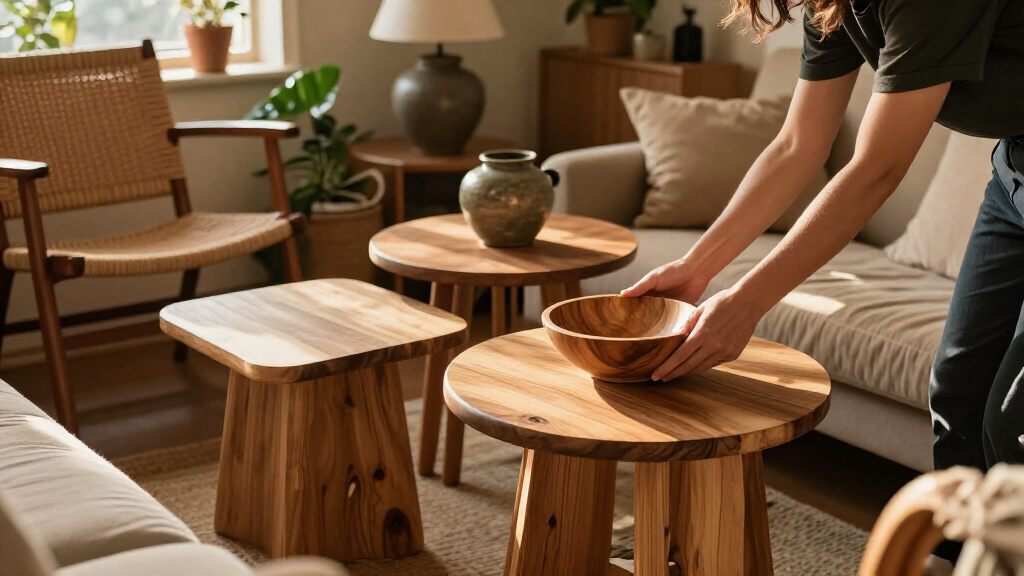
She also advises combining different materials and metals, including brass with chrome or bronze with nickel. The aim, in her account, is to create variation in texture and finish so a room feels less like a coordinated showroom. The article does not prescribe particular products or require readers to replace furniture they already own.
On colour, Grace argues that a room need not be limited to two shades. She describes her own peach-and-mint office, where yellow blinds, a red sofa and a pink artwork frame sit alongside the starting colours. She says these elements do not need to match exactly to contribute to a coherent room.
Mixing Pieces Without Replacing Them
The practical point of Grace’s advice is that a more individual-looking room does not have to begin with a shopping list. Rearranging furniture already in the home can change how a room reads, while varying materials, finishes and colour tones can give existing objects a stronger relationship to one another.
That approach may also help readers avoid treating every new design trend as a requirement. Grace says shifting advice about eclectic interiors and highly specified home styles can feel contradictory. Her piece offers a flexible method instead: keep a starting point, then introduce contrasts gradually. This is design guidance from a contributor, not a tested claim that a particular arrangement will suit every home.
Her suggestions also frame decorating as a process rather than a demand for a fully coordinated set. Small changes—such as moving a chest of drawers, adding a contrasting chair or bringing in a colour from an artwork—can be tried before larger purchases are considered.
As an affiliate, we earn on qualifying purchases.
From Matching Sets to Layered Colour
Grace opens with a memory of growing up in the 1980s, when she says her mother taught her that furnishings should match. In her example, a peach-and-green scheme meant choosing cushions, lampshades and decorative vases in the same shades, ideally from one shop. She contrasts that approach with today’s use of terms such as “whimsical” and “eclectic,” as well as online references to particular home styles.
For readers unsure how to choose colours, she points to familiar colour-wheel approaches. These include using neighbouring colours such as red, orange and yellow for a harmonious scheme, or opposites such as green and red for contrast. She also suggests combining different tones within one colour family, such as pale pink with raspberry, and using three colours spaced around the wheel, such as red, blue and yellow.
Grace presents these methods as starting points, not strict rules. She says a room can benefit from an unexpected element, referring to the “unexpected red” idea: a small accent colour that appears to sit outside the main scheme. She says red and yellow are favourites she uses in rooms with different wall colours.
colorful throw pillows for living room
As an affiliate, we earn on qualifying purchases.
As an affiliate, we earn on qualifying purchases.
Advice, Not a Design Formula
The supplied article presents Grace’s personal decorating advice and examples from her own home; it does not report a survey, design-industry study or measured results. It is not clear from the source material when the article was published, and no additional contributors or independent experts are quoted.
The suggestions are also subjective. The source does not establish that every combination of furniture, metal finishes or colours will work in every room, or provide detailed guidance for factors such as room size, lighting, budget or rental restrictions. Readers are left to adapt the ideas to their own spaces and preferences.
As an affiliate, we earn on qualifying purchases.
Try One Change at a Time
Grace’s proposed starting point is to identify an object the homeowner already likes, such as a multicoloured cushion, artwork or rug. She suggests choosing one of its less prominent colours for a larger feature, such as a wall, then repeating another shade elsewhere in the room. Her own example uses green for the walls and raspberry for a sofa, with other colours added through smaller details.
For anyone working with an existing matching set, her next step is to move one piece to another room or pair it with furniture in a different material or style. The article does not set out a formal follow-up or product launch; it offers readers a sequence of small decorating experiments rather than a single prescribed endpoint.
As an affiliate, we earn on qualifying purchases.
Key Questions
What does Grace H mean by the “match-match” trap?
She uses the phrase for rooms where furniture, furnishings and accessories closely match in colour, finish or source. Her advice is to add variation rather than replace everything.
Do matching furniture pieces need to be thrown out?
No. Grace explicitly advises against immediately getting rid of matching furniture. She suggests moving pieces into different rooms or combining them with items in other styles and finishes.
How can I choose colours for a room?
Grace suggests starting with an object that contains several colours, such as a cushion, artwork or rug. Pick a less dominant shade for a larger area, then repeat other colours elsewhere in the room.
Do all the colours in a room need to match exactly?
No. Grace says colours can relate through repeated shades and tones without being identical. She also recommends trying colour-wheel combinations, while treating those combinations as guides rather than rules.
Source: rss
Halloween Picks
halloween
As an affiliate, we earn on qualifying purchases.