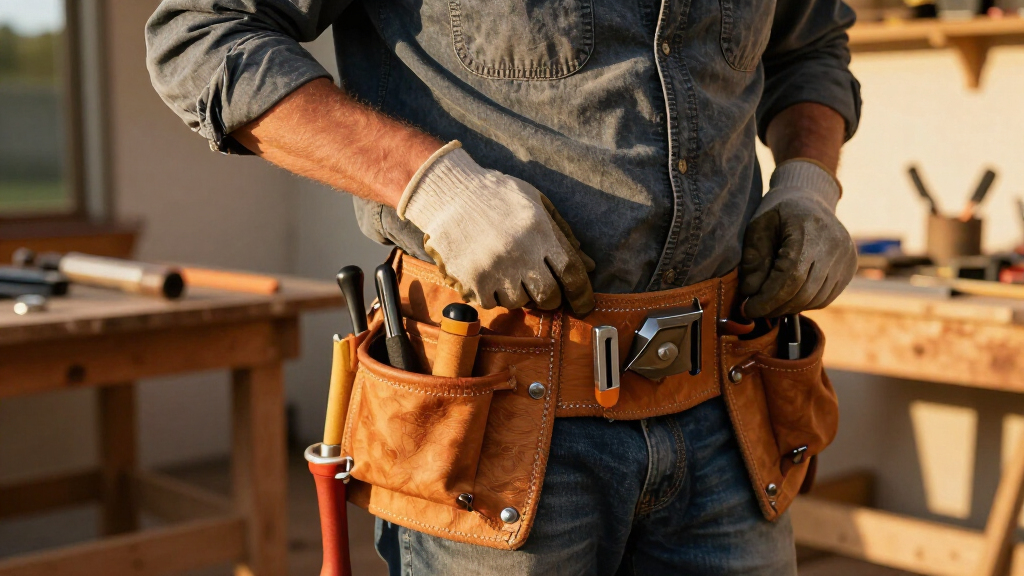

OX Framing Leather Tool Belt + Suspenders is my best overall choice among heavy-duty tool belts because its leather construction, complete rig, and supported load design suit demanding daily work. For a more accessible ready-to-wear package, the AWP Tool Belt Tool Rig balances storage and versatility, while the DEWALT Professional Tool Belt Organizer is the premium pick for buyers who carry a broad tool assortment. The main choice is between durable but heavier leather, lighter synthetic materials, and suspenders that spread the load while adding bulk. Buyers also need a pocket layout matched to their trade rather than simply choosing the model with the highest pocket count. Continue reading for the full breakdown of all 11 options and the tradeoffs behind their rankings.

Get business pricing on tools and workshop supplies
- Business-only prices and quantity discounts
- Tax-exempt purchasing
- Multiple users, one account, clear invoices
Complete the kit

Key Takeaways
- The OX leather rig takes the top position because it combines a trade-focused framing layout with suspenders and a material suited to long service, though it is heavier than synthetic alternatives.
- AWP offers the strongest value balance for buyers who want an organized complete rig without paying for the leather construction or large pocket count of the higher-ranked worksite systems.
- DEWALT leads for maximum organization with 25 pockets and suspenders, but that capacity makes more sense for varied tool loads than for workers who carry only daily basics.
- The three Klein belts serve different buyers: the 5415 favors a durable leather foundation, the 5705 supports a lighter modular setup, and the 5225 prioritizes simple adjustment across a wide waist range.
- Suspenders separated the full-load rigs from the basic belts; OX, Dead On Tools, DEWALT, and the 7-piece rig are better aligned with heavier carry, while ToughBuilt and the Klein work belts favor configurable or streamlined setups.


| heavy-duty tool belt | Material |
|---|---|
| Klein Tools 5415 Heavy-Duty Le | Heavy-duty leather |
| Arrow Heavy-Duty Electrician T | 840D Oxford fabric |
| OX Framing Leather Tool Belt a | Oil-tanned leather |
| AWP Tool Belt Tool Rig | 600-denier polyester |
| Klein Tools 5705 PowerLine Web | Nylon webbing |
| ToughBuilt ClipTech Padded Wor | — |
| Dead On Tools 1680 Denier Poly | Polyester |
| DEWALT Professional Tool Belt | — |
| 7-Piece Professional Tool Belt | 1680D polyester |
| Klein Tools 5225 Adjustable El | Polypropylene webbing |
| 11 Pocket Heavy Duty Construct | 1000D polyester |
More Details on Our Top Picks
Klein Tools 5415 Heavy-Duty Leather Tool Belt
I rank the Klein Tools 5415 as the best standalone leather belt because its double-tongue buckle offers a steadier hold than a typical single-clasp design when pouches are heavily loaded. Its oil-free, basket-weave presentation also looks more traditional than the fabric-based Arrow belt. Unlike the OX Framing Leather Tool Belt, however, this is a belt rather than a complete rig: buyers must supply compatible pouches, and there are no suspenders to spread weight across the shoulders. The heavy-duty leather construction suits contractors who value stiffness and long service life, but it will feel heavier and less forgiving than nylon webbing. I place it above lighter standalone belts for load security, while its 36-to-44-inch fit range and lack of padding keep it from being the most adaptable choice.
Pros:- Heavy-duty leather resists sagging under loaded pouches
- Double-tongue buckle provides secure, balanced fastening
- Basket-weave embossing gives the belt a traditional professional finish
- Adjustable across a 36-to-44-inch waist range
Cons:- No padding or suspenders to distribute a heavy load
- Narrower size range than the Klein Tools 5705
- Heavier and less flexible than fabric or nylon belts
Best for: Contractors and electricians with 36-to-44-inch waists who already own pouches and want a rigid leather foundation
Not ideal for: Buyers needing a complete padded rig or sizing beyond 44 inches, since this is an unpadded medium-range belt
- Material:Heavy-duty leather
- Pattern:Embossed basket weave
- Buckle Type:Double-tongue
- Minimum Waist Size:36 inches
- Maximum Waist Size:44 inches
- Intended Users:Contractors and electricians
Our verdict“Choose this belt if load stability and traditional leather construction matter more than padding, included storage, or broad sizing.”
Arrow Heavy-Duty Electrician Tool Belt with 10 Pockets
The Arrow Heavy-Duty Electrician Tool Belt earns my value slot by combining a belt and useful storage without moving into the bulk of a full suspended rig. Its 10-pocket layout, tape-measure clip, and hammer holder provide more ready-made organization than the pouch-free Klein Tools 5705, while 840D Oxford fabric should feel lighter and more flexible than the Klein 5415 leather belt. A reflective strip adds visibility around dim work areas, a benefit the other two standalone belts lack. The compromise is load management: once every compartment is filled, the unsupported waist belt may become tiring because no suspenders are included. Fabric also lacks the rigid pouch support and classic longevity associated with thick leather. I favor this model for mixed electrical and DIY jobs, especially when its 49-inch adjustment range matches the buyer.
Pros:- Ten pockets organize a practical everyday tool selection
- 840D Oxford fabric balances abrasion resistance with flexibility
- Fits waists up to 49 inches
- Reflective strip and dedicated clips improve job-site utility
Cons:- Can become uncomfortable when all pockets are heavily loaded
- Fabric offers less rigid support than leather
- Reflective trim may lose effectiveness with prolonged wear
Best for: Electricians, carpenters, and frequent DIY users who want organized storage at the waist without buying a full suspender rig
Not ideal for: Tradespeople carrying dense tools all day, because the belt lacks suspenders and may become tiring when fully loaded
- Material:840D Oxford fabric
- Construction:Triple-layer heavy-duty fabric
- Number of Pockets:10
- Maximum Waist Size:49 inches
- Visibility Feature:Reflective strip
- Measuring Tool Storage:Tape-measure clip
- Hammer Storage:Hammer holder
Our verdict“This is my value choice for buyers who need useful storage and broad adjustment without the cost or bulk of a leather suspender rig.”
OX Framing Leather Tool Belt and Suspenders
I give the OX Framing Leather Tool Belt and Suspenders the framing role because it pairs reinforced pouches with padded shoulder support, spreading a loaded rig across more of the body than the Klein Tools 5415 can. Oil-tanned leather and reinforced rivets are suited to repeated contact with fasteners, lumber, and rough job-site surfaces, while adjustable straps help keep the pouches from shifting during movement. Compared with the AWP Tool Rig, the OX favors a traditional leather build over maximum pocket count and lighter polyester construction. That makes it a stronger match for career framers, but a less approachable choice for occasional repairs. The listing does not state the rig’s weight or pouch capacity, which makes load planning harder, and the size-L configuration limits flexibility. I rank it highly for all-day load distribution, not compactness.
Pros:- Oil-tanned leather withstands demanding framing environments
- Padded suspenders distribute weight beyond the waist
- Reinforced rivets strengthen high-stress pouch areas
- Adjustable straps help stabilize the rig during movement
Cons:- Listed only in size large
- Product weight is not provided
- Pouch count and capacity are not specified
Best for: Professional framers and carpenters who carry substantial tool loads and prefer a reinforced leather rig with shoulder support
Not ideal for: Occasional DIY users or buyers outside a large fit range who want a light, clearly specified storage system
- Brand:OX
- Model Number:OX-P263609
- Material:Oil-tanned leather
- Size:Large
- Included Components:Framing belt and suspenders
- Suspender Type:Padded and adjustable
- Reinforcement:Reinforced rivets
Our verdict“Pick the OX rig for demanding framing work where leather durability and shoulder-supported carrying outweigh low weight and detailed capacity data.”
AWP Tool Belt Tool Rig
The AWP Tool Belt Tool Rig takes my high-capacity spot because its 18 pockets and tool loops hold a broader working assortment than the 10-pocket Arrow belt. Padded shoulder, back, and waist straps distribute that equipment more effectively, making this a better match for contractors who switch tools often without returning to a toolbox. Carry handles also make the loaded rig easier to move between work areas. Compared with the OX Framing Leather Tool Belt, the AWP uses 600-denier polyester, which should be lighter and more flexible but lacks leather’s rigidity and premium wear character. Capacity creates its main weakness: the rig can feel bulky when only a few tools are needed, and its multi-strap design may not sit equally well on every build. I rank it for organization and carrying comfort, while the OX remains the more trade-specific framing choice.
Pros:- Eighteen pockets and loops support a varied tool load
- Padded shoulder, back, and waist straps spread carrying pressure
- Reinforced seams strengthen heavily used areas
- Carry handles simplify transport when the rig is off the body
Cons:- Bulky for jobs requiring only a handful of tools
- Fixed rig layout may not fit every body shape comfortably
- 600D polyester is less rigid than a leather framing rig
Best for: General contractors and maintenance professionals who rotate among many tools and want shoulder-supported, high-capacity organization
Not ideal for: Minimalist users or workers with a short tool list, since the 18-pocket suspended rig adds avoidable bulk
- Brand:AWP
- Model Number:L-699-P-3
- Material:600-denier polyester
- Number of Pockets:18
- Strap Padding:Shoulder, back, and waist
- Transport Feature:Carry handles
- Warranty:1 year
- UPC:019374973155
Our verdict“Choose the AWP rig when accessible storage and padded weight distribution matter more than compactness or leather construction.”
Klein Tools 5705 PowerLine Web Work Belt
I select the Klein Tools 5705 PowerLine for buyers who want to build a pouch layout around their trade rather than accept a fixed organizer. The 2-inch nylon web belt accommodates compatible tool pouches, and its metal quick-release buckle makes fit changes faster than the double-tongue closure on the Klein Tools 5415. It also reaches waists up to 52 inches, the broadest stated maximum among these five picks. That adaptability comes with missing pieces: unlike the Arrow Heavy-Duty Electrician Tool Belt, it includes no pockets, hammer holder, or tape clip. Buyers must budget for each attachment, and the absence of padding can concentrate pressure once those pouches become heavy. Nylon is easier to manage than thick leather, though it provides less rigid support. I rank this as the most configurable option, provided the buyer values modularity over ready-to-wear storage.
Pros:- Modular design accepts a range of compatible tool pouches
- Adjusts to waists up to 52 inches
- Metal quick-release buckle supports fast fit changes
- Nylon webbing is lighter and more flexible than heavy leather
Cons:- Pouches and holders must be purchased separately
- No padding for heavy all-day loads
- Less rigid under concentrated weight than a thick leather belt
Best for: Professionals with waists up to 52 inches who already own compatible pouches or want to assemble a trade-specific carrying layout
Not ideal for: Buyers seeking an all-in-one padded organizer, because the belt includes no pouches, loops, or shoulder support
- Product Line:PowerLine
- Material:Nylon webbing
- Belt Width:2 inches
- Maximum Waist Size:52 inches
- Buckle Material:Metal
- Buckle Type:Quick release
- Pouch Compatibility:Accepts multiple tool-pouch configurations
Our verdict“The 5705 is the right choice for buyers who want broad sizing and a custom pouch setup rather than a complete tool rig.”
ToughBuilt ClipTech Padded Work Belt, Adjustable Fit, TB-CT-41B
I rank the ToughBuilt ClipTech Padded Work Belt as the best modular foundation because its detachable-pouch compatibility lets me tailor a loadout to each job. The 32–48-inch adjustment range covers more users than many fixed-size leather belts, while the padding spreads tool weight better than the unpadded Klein Tools 5225. It also offers a sturdier starting point than a basic web belt, thanks to its heavy-gauge steel buckle. The tradeoff is dependence on the ClipTech accessory system: it has less value for anyone who already owns conventional pouches, and no pouches are listed with the belt. Compared with the complete DEWALT Professional Tool Belt Organizer, this pick requires more add-on purchases, but it gives me far greater control over where and when pouches are carried.
Pros:- Adjusts across a broad 32–48-inch waist range
- Padding distributes heavier loads across the waist
- ClipTech compatibility supports removable, customizable storage
- Heavy-gauge steel buckle suits demanding jobsite use
Cons:- ClipTech dependence limits compatibility with other pouch systems
- Pouches are not included in the listed package
- Padded construction can feel bulky under tight work clothing
Best for: I recommend it for tradespeople who want to build a task-specific ClipTech setup and regularly remove or reposition pouches.
Not ideal for: I would skip it for buyers who want a complete rig out of the box or already own several non-ClipTech pouches.
- Brand:ToughBuilt
- Model Number:TOU-CT-41B
- Waist Size Range:32–48 inches
- Belt Material:Durable materials
- Belt Design:Padded with extension
- Buckle Type:Heavy-gauge steel
- Accessory Compatibility:ClipTech tool pouches
- Warranty:Limited lifetime
Our verdict“I would choose this as a comfortable modular base, provided the ClipTech ecosystem fits the rest of the planned loadout.”
Dead On Tools 1680 Denier Poly Carpenter’s Tool Belt with Suspenders, Black
I place the Dead On Tools Carpenter’s Tool Belt in the carpenter-focused slot because its 24-pocket layout combines inside organization with fast-access exterior storage. Dedicated drill, hammer, and tape holders make it better suited to framing and trim work than the pouch-free Klein Tools 5225. Its gel-padded suspenders shift part of a loaded rig’s weight away from the hips, while vinyl reinforcement protects the busiest pouch areas. Compared with the 32-pocket 7-Piece Professional Tool Belt Rig, this model offers less total storage but a simpler layout that should be easier to manage during repetitive work. I would still avoid overloading it: the rig is bulky, becomes heavy when filled, and its polyester-and-vinyl construction lacks the traditional feel and repair potential of the OX leather rig. Its 29–46-inch fit range is also narrower at the top end.
Pros:- Twenty-four pockets separate fasteners, hand tools, and accessories
- Gel-padded suspenders transfer weight away from the hips
- Dedicated holders support common carpentry tools
- Vinyl-reinforced pouches resist wear in high-contact areas
Cons:- Bulky for jobs that require only a minimal tool selection
- Can become tiring when every pocket is loaded
- Maximum 46-inch waist fit is smaller than several alternatives
Best for: I recommend it for carpenters and remodelers who carry a drill, hammer, tape, fasteners, and several hand tools throughout the day.
Not ideal for: I would skip it for light-duty users who carry only a few tools or workers needing a fit above a 46-inch waist.
- Material:Polyester
- Inside Pockets:17
- Outside Pockets:7
- Total Pockets:24
- Waist Size Range:29–46 inches
- Suspenders:Gel-padded
- Belt:Adjustable
- Pouch Reinforcement:Vinyl
Our verdict“I would pick this for carpentry work that demands organized access without moving up to the largest 32-pocket rig.”
DEWALT Professional Tool Belt Organizer with Suspenders and 25 Pockets
I rank the DEWALT Professional Tool Belt Organizer first for heavy-duty work because it balances capacity, load support, and jobsite-ready materials more evenly than the other picks. Its 25 pockets provide serious organization without reaching the sprawling 32-pocket layout of the 7-Piece Professional Tool Belt Rig. A 5.5-inch padded belt and ergonomic suspenders spread the load across the waist and shoulders, while 1680-denier fabric and dirt-repellent tarpaulin suit rough, messy sites. Two handles also make the loaded rig easier to move than the Dead On Tools belt when it is off the body. That versatility comes with substantial bulk, so I would not choose it for service calls involving only a meter and a few drivers. The lack of a stated warranty and a precise waist range also leave two buying details unresolved compared with ToughBuilt’s clearer coverage and sizing.
Pros:- Twenty-five pockets balance high capacity with manageable organization
- 1680-denier fabric and tarpaulin suit dirty, abrasive jobsites
- Padded belt and ergonomic suspenders distribute heavy loads
- Two sturdy handles simplify transport when the rig is loaded
Cons:- Bulky for confined spaces and light service work
- No precise waist range is provided in the product data
- Warranty coverage is not specified
Best for: I recommend it for full-time contractors who carry a broad tool load and want support from both a padded belt and suspenders.
Not ideal for: I would skip it for mobile technicians with small tool kits or buyers who need a confirmed waist range before ordering.
- Brand:DEWALT
- Model Number:DWST540602
- Number of Pockets:25
- Primary Material:1680 denier fabric
- Protective Material:Dirt-repellent tarpaulin
- Belt Width:5.5 inches
- Included Support:Ergonomic suspenders
- Transport Features:2 handles
- Warranty:Not specified
Our verdict“I see this as the strongest all-around choice for contractors who value supported capacity more than a slim profile.”
7-Piece Professional Tool Belt Rig with Comfort Suspenders
I reserve the maximum-capacity role for the 7-Piece Professional Tool Belt Rig, whose 32 pockets and multiple holsters provide more storage than either the 25-pocket DEWALT organizer or the 24-pocket Dead On Tools belt. The large 11-by-7-by-9-inch pouches can hold bulky fasteners and tools that smaller rigs force into separate bags. Its 1680D polyester construction and padded waist belt also fit the heavy-duty brief. Yet more capacity is not automatically better: a fully stocked seven-piece setup can become cumbersome, and arranging all those components takes more planning than using the DEWALT rig. The 36–49-inch waist range reaches farther at the upper end but excludes smaller users accommodated by Dead On Tools. I rank it below DEWALT because load discipline matters more here; this rig rewards specialized organization, while the DEWALT offers a more balanced everyday package.
Pros:- Thirty-two pockets provide the highest capacity in this batch
- Seven-piece configuration supports specialized tool placement
- Large pouches accommodate bulky tools and fastener supplies
- 1680D polyester and waist padding suit demanding work
Cons:- High-capacity layout becomes cumbersome when fully stocked
- Seven components require time to arrange effectively
- Minimum 36-inch waist fit excludes smaller users
Best for: I recommend it for framers, builders, and maintenance workers who carry large fastener loads plus several full-size tools.
Not ideal for: I would skip it for users below a 36-inch waist or anyone who prefers a light, ready-arranged rig.
- Unit Count:7 pieces
- Number of Pockets:32
- Material:1680D polyester
- Waist Belt Range:36–49 inches
- Large Pouch Dimensions:11 x 7 x 9 inches
- Small Pouch Dimensions:4.5 x 2.5 x 6 inches
- Waist Support:Ergonomic padding
- Storage Format:Multiple pouches and holsters
Our verdict“I would choose this when maximum on-body storage outweighs the added setup time, weight, and bulk.”
Klein Tools 5225 Adjustable Electrician Tool Belt, 2-Inch Wide, Fits Up to 48-Inch Waist
I choose the Klein Tools 5225 for electricians who want a durable belt without accepting someone else’s pouch arrangement. Its 2-inch polypropylene webbing forms a straightforward base for a personalized kit, and the corrosion-resistant quick-release buckle is better suited to repeated jobsite use than lightweight plastic hardware. Compared with the padded ToughBuilt ClipTech belt, the Klein is slimmer and avoids commitment to a proprietary pouch system. It is also far less cumbersome than the 25-pocket DEWALT organizer for short service calls or ladder work. The simplicity creates clear compromises: no pouches, padding, or suspenders are included, so heavier loads will concentrate pressure at the waist and require extra purchases. Although it adjusts up to 48 inches, no minimum size is stated. I rank it as a specialist pick because its rugged restraint favors experienced users who already know their preferred pouch layout.
Pros:- Two-inch polypropylene webbing provides a sturdy mounting base
- Metal quick-release buckle resists corrosion
- Simple layout accepts a user-selected pouch arrangement
- Slimmer and less restrictive than loaded suspension rigs
Cons:- No pouches, padding, or suspenders are included
- Heavy loads place more pressure directly on the waist
- Fit stops at a 48-inch waist and no minimum size is stated
Best for: I recommend it for electricians and service technicians who own compatible pouches and want a slim, configurable belt.
Not ideal for: I would skip it for workers carrying heavy all-day loads who need padding, suspenders, and included storage.
- Brand:Klein Tools
- Model:5225
- Product Type:Adjustable electrician tool belt
- Material:Polypropylene webbing
- Belt Width:2 inches
- Maximum Waist Size:48 inches
- Buckle:Quick-release corrosion-resistant metal
- Country of Manufacture:USA
Our verdict“I would buy this as a durable bare-belt platform for a light electrician loadout, not as a complete heavy-carry rig.”
11 Pocket Heavy Duty Construction Tool Belt with Adjustable Web Belt and Quick Release Buckle
I rank the 11 Pocket Heavy Duty Construction Tool Belt as the best no-fuss organizer because it pairs 11 practical pockets with abrasion-resistant 1000D polyester and rust-proof rivets. That construction suits contractors who want dependable storage without buying a full suspended rig. Compared with the DEWALT Professional Tool Belt Organizer, its smaller pocket count makes tools easier to locate and keeps the setup less complicated, but it cannot accommodate the same broad loadout. The two-inch adjustable web belt and quick-release buckle make removal straightforward between jobs. Still, the lack of suspenders or stated padding means a full load may concentrate weight at the waist; the minimum 33-inch fit also excludes some smaller users. I see this as a balanced everyday work belt, not the best choice for carrying an entire workshop.
Pros:- 1000D polyester resists abrasion on demanding jobsites
- Eleven pockets provide useful organization without the bulk of a 25-pocket rig
- Rust-proof rivets reinforce high-stress areas for longer service life
- Quick-release buckle and 33-to-50-inch adjustment support convenient daily use
Cons:- A full load may become uncomfortable because suspenders and dedicated belt padding are not included
- The 33-inch minimum belt length will not fit some smaller waists
- Eleven pockets offer less capacity than larger professional rigs such as the DEWALT organizer
Best for: Carpenters, electricians, and general contractors who want a durable, moderately sized organizer for a focused set of everyday tools
Not ideal for: Smaller-waisted users below 33 inches or tradespeople carrying heavy, extensive loadouts that call for suspenders and more than 11 pockets
- Number of Pockets:11
- Material:1000D polyester
- Reinforcement:Rust-proof rivets
- Belt Width:2 inches
- Belt Length Range:33 to 50 inches
- Closure Type:Quick-release buckle
- Available Colors:Brown and black
- Intended Trades:Construction, carpentry, electrical work, and contracting
Our verdict“This is my pick for contractors who value durable, straightforward tool organization more than maximum capacity or suspended-load comfort.”
How We Picked
I compared these heavy-duty tool belts by weighing load support, material durability, pocket usefulness, fit range, and how readily each model serves a defined trade. Pocket count alone did not produce a high rank; I placed more weight on whether the storage could remain accessible without turning the belt into an oversized, poorly balanced load. Suspenders earned extra credit on high-capacity rigs because they move part of the weight away from the hips. Leather scored well for abrasion resistance and long service potential, while synthetic fabrics gained ground through lower weight, flexibility, and easier care.
The order also reflects completeness and buyer value. A full rig ranks above a bare belt when it provides a coherent setup out of the box, but a simple belt can still place well when its modularity or size range fills a clear need. I ranked the OX rig first for its combination of support, work-focused construction, and framing suitability; AWP follows as the better cost-conscious choice, while DEWALT earns the premium role through capacity and supported carry. Lower positions do not mean poor quality: products such as the Klein 5705 and ToughBuilt ClipTech are narrower-purpose choices that make more sense for buyers who already know which pouches they want.
Factors to Consider When Choosing Heavy-duty Tool Belts
The right heavy-duty tool belt should match the weight carried, the work performed, and the length of the shift. I would choose the carrying system before comparing small features, since an unsuitable foundation cannot be fixed by adding more pockets.
Match the Support System to the Working Load
A belt carrying a tape measure, fasteners, and two hand tools places a very different demand on the body than a framing load filled with nails and larger tools. For heavier setups, suspenders spread weight across the shoulders and reduce the pressure concentrated at the waist. That benefit comes with added bulk, more adjustment points, and possible interference with jackets or safety harnesses. A padded waist belt can be enough for moderate loads, especially when the tools are divided evenly between both sides. Buyers often mistake extra capacity for useful capacity and then fill every pocket, creating more fatigue than the job requires. I favor the smallest support system that carries the real daily load comfortably, with room for only occasional additions.
Choose Leather or Synthetic Construction Deliberately
Leather handles abrasion well, develops to the wearer’s shape, and can provide years of service when kept clean and conditioned. Its drawbacks are weight, break-in time, moisture sensitivity, and a higher entry price. Synthetic rigs made from dense woven fabric are typically lighter and dry faster, which can be helpful during hot shifts or outdoor work. Stitching, pocket reinforcement, and stress-point construction matter more than fabric thickness claims by themselves. A lightweight synthetic belt may be the smarter daily choice if it is replaced before seams fail, while leather suits buyers willing to perform periodic care. I would pay more for reinforced high-wear areas before paying for decorative finishes or unused capacity.
Judge Pocket Layout by Workflow, Not Quantity
A high pocket count sounds useful, but small divided compartments can slow work when they do not match the tools being carried. Electricians often benefit from narrow slots and easy access to pliers, drivers, and testers, while framers need open fastener pockets and secure hammer placement. Deep pockets retain hardware but make small items harder to retrieve, especially while wearing gloves. Shallow pockets improve access yet may spill contents when climbing or kneeling. Fixed layouts work well for stable routines, while removable pouches suit people whose load changes between tasks. Before buying, I would list the tools used every hour and choose a layout built around that short list, leaving occasional tools in a separate bag.
Treat Fit Range as More Than a Waist Measurement
Published belt sizing rarely tells the whole story because work clothing, winter layers, and pouch placement change the effective fit. A belt should have adjustment room in both directions, rather than fitting at the final hole or buckle position on day one. Wider belts spread pressure but may rub the ribs or hips on shorter torsos. Suspenders also need enough adjustment to hold the belt at the chosen height without pulling it upward throughout the day. Buyers sharing a rig should favor quick web adjustments, though repeated resizing can disturb pouch spacing and balance. I would measure over normal work clothes and check whether the loaded belt can sit above the hips without pinching.
Decide Between a Complete Rig and a Modular Foundation
A complete rig provides matched pouches, attachment points, and support, making it the simpler route for a first setup. The risk is paying for pockets that do not fit the buyer’s trade or dominant hand. A modular belt lets the user place each component independently and replace worn pouches without retiring the entire system. That flexibility can cost more over time, and mixed components may shift or crowd one another if their attachment methods do not align. Buyers with a stable daily tool list often get better value from a well-arranged fixed rig, while multi-trade workers gain more from removable, task-specific pouches. I would also check replacement availability, since a modular platform loses much of its appeal when compatible parts are difficult to source.
Know When a Higher Price Pays Off
Paying more makes sense when the belt will carry substantial weight every workday, because better support and reinforced wear points affect both comfort and replacement frequency. Occasional DIY work rarely justifies premium leather or a large suspended rig. Price should be judged against the complete setup: an inexpensive bare belt may require several pouches, loops, and pads before it becomes usable. Conversely, a large package is poor value when half its storage remains empty. I would direct the biggest share of the budget toward the belt, buckle, stitching, and load support, since those parts govern stability. Extras deserve the remaining budget only when they support a repeated task rather than a hypothetical need.
Frequently Asked Questions
Is a Leather Tool Belt Better Than a Synthetic Belt for Daily Trade Work?
Leather is the better fit when abrasion resistance and long service life outweigh concerns about weight and care. Synthetic construction suits buyers who work in heat, encounter wet conditions, or want a lighter belt for frequent movement. Leather may soften and conform over time, while woven fabric usually feels flexible sooner but can wear at exposed seams. The OX and Klein 5415 appeal to leather-focused buyers, whereas AWP, DEWALT, and Dead On Tools provide lighter alternatives with more built-in organization. I would base the choice on working conditions and carried weight, not on material prestige.
Do I Need Suspenders on a Heavy-Duty Tool Belt?
Suspenders make sense when a loaded belt pulls downward, creates concentrated hip pressure, or carries bulky fasteners for long periods. They are particularly useful on framing rigs and high-capacity organizers such as the OX, Dead On Tools, and DEWALT options. A lighter electrician setup may feel less restrictive without them, especially when climbing, working overhead, or wearing outer layers. Suspenders must be adjusted so they share the weight rather than lifting the belt away from its stable position. I would choose them for consistently heavy loads and skip them for streamlined carry.
How Many Pockets Should a Heavy-Duty Tool Belt Have?
There is no useful target number without knowing what the wearer carries each hour. Ten or eleven pockets can cover a focused electrician or general construction load, while DEWALT’s 25-pocket layout better serves buyers who need many small tools and fasteners separated. More pockets add material, width, and temptation to carry rarely used items. A practical layout should provide one clear home for every daily tool without forcing the wearer to search through nested compartments. I would prioritize pocket shape, access, and balance ahead of the advertised total.
Can the Same Tool Belt Work for Electrical and Framing Jobs?
A shared belt can work when it accepts removable pouches, but the ideal layouts for the two trades differ. Electrical work favors divided storage for hand tools and small components, while framing demands roomy nail pockets, strong hammer support, and better load distribution. A modular foundation such as the Klein 5705 or ToughBuilt ClipTech can adapt more readily than a fixed trade-specific rig. Reconfiguring pouches takes time, and one universal setup may become heavier than either dedicated arrangement. For frequent switching, I would choose a modular belt with separate pouch sets; for daily specialization, a purpose-built rig is the cleaner choice.
Should a First-Time Buyer Choose a Complete Rig or Build One From Separate Parts?
A complete rig is usually easier for a first-time buyer because the belt, pouches, and support components are designed to function together. The Arrow 10-pocket belt and AWP rig offer clearer starting points than a bare belt that still needs attachments. Building from separate parts gives experienced buyers more control over placement, dominant-hand access, and task-specific storage. It can also raise the total price and make fit problems harder to diagnose. I recommend a modest complete setup for beginners, followed by targeted additions only after real carrying habits become clear.
Conclusion
For demanding daily framing and construction work, my best overall pick is the OX Framing Leather Tool Belt + Suspenders because it pairs durable material with a load-supporting complete rig. The AWP Tool Belt Tool Rig is my best value choice for buyers who want useful organization without moving into premium leather pricing. Buyers who carry a large and varied tool set should choose the DEWALT 25-pocket organizer as the premium option, provided they will use its added capacity. For beginners, the Arrow 10-pocket electrician belt offers a more approachable layout that is less likely to encourage overloading. ToughBuilt ClipTech and Klein 5705 make the most sense for modular setups, Klein 5225 suits buyers who need broad size adjustment, and Klein 5415 serves those who want a durable leather base. For supported synthetic framing carry, I would narrow the choice to Dead On Tools or the 7-piece rig, while the 11-pocket construction belt fits buyers seeking a simple ready-made configuration.
Fall yard work Picks
leaf blowers
As an affiliate, we earn on qualifying purchases.