
TL;DR

Get business pricing on tools and workshop supplies
- Business-only prices and quantity discounts
- Tax-exempt purchasing
- Multiple users, one account, clear invoices
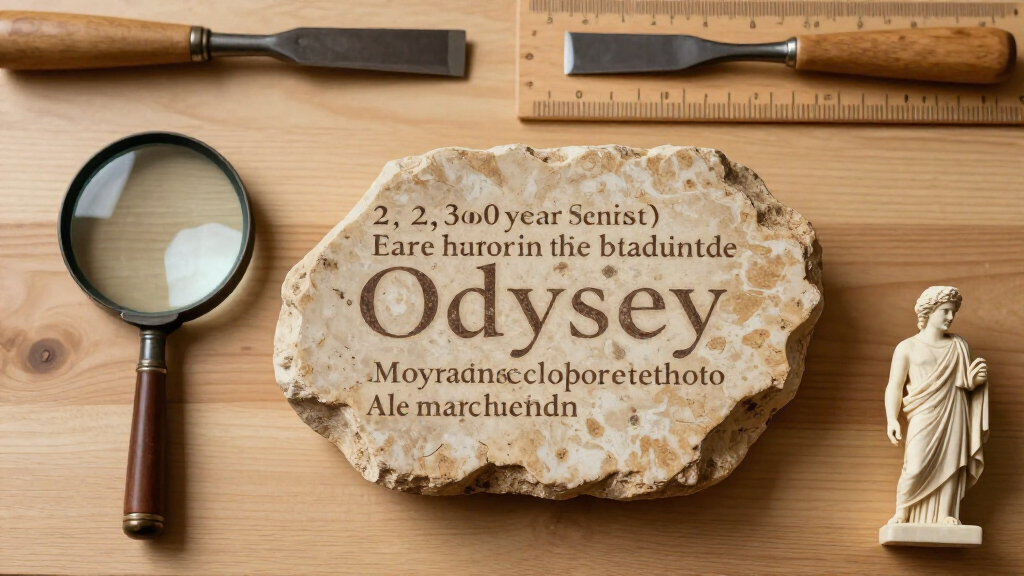
The Met has unveiled a 2,300-year-old fragment of Homer’s ‘Odyssey’ for public viewing. The artifact is a rare surviving piece of ancient Greek literature, attracting scholarly and public interest. Its display marks a significant moment in the appreciation of classical antiquity.
The Metropolitan Museum of Art has opened to the public a 2,300-year-old fragment of Homer’s ‘Odyssey’, making it one of the few surviving pieces of ancient Greek literary manuscripts. This rare artifact offers a direct link to the origins of Western literature and is now accessible for viewing in New York, highlighting ongoing efforts to preserve and showcase ancient texts.
The fragment, believed to be part of an ancient manuscript of Homer’s ‘Odyssey,’ dates back to roughly the 3rd century BCE. It was acquired by The Met through a private collection and has been authenticated by experts in ancient Greek manuscripts. The piece is made of papyrus and contains partial lines from the epic poem, which recounts the adventures of Odysseus after the Trojan War.
According to Dr. Emily Carter, a classical scholar at The Met, the fragment is significant because it provides insight into how Homer’s texts were transmitted and preserved in antiquity. The artifact’s display is part of The Met’s ongoing focus on ancient Greek art and literature, aiming to deepen public understanding of classical civilizations.
Why the Homer Fragment Matters for Cultural Heritage
This fragment is a rare surviving piece of Homeric literature, offering scholars and the public a tangible connection to ancient Greece. Its preservation and display help illuminate the transmission of classical texts over millennia, demonstrating the enduring influence of Homer’s work on Western culture. The artifact also underscores the importance of archaeological and manuscript conservation efforts, which preserve these fragile pieces of history for future generations.
As an affiliate, we earn on qualifying purchases.
The Fragment’s Historical and Archaeological Background
Homer’s ‘Odyssey’ is considered one of the foundational texts of Western literature, composed in the 8th century BCE. The surviving manuscripts from antiquity are scarce, with most existing copies dating from the medieval period. The 3rd-century BCE fragment represents an important link in the manuscript tradition, possibly originating from the Hellenistic period when Homer’s texts were widely copied and studied. Its discovery and authentication add to the understanding of how Homer’s works were transmitted across centuries.
“This fragment provides invaluable insight into the ancient manuscript tradition of Homer’s ‘Odyssey,’ illustrating how these texts were preserved and passed down through generations.”
— Dr. Emily Carter, Classical Scholar at The Met
As an affiliate, we earn on qualifying purchases.
Questions About the Fragment’s Provenance and Authenticity
While experts have authenticated the fragment as dating from approximately 2,300 years ago, questions remain regarding its exact provenance and how it was preserved over time. The precise location where it was discovered is not publicly confirmed, and ongoing research may refine its dating or significance. Additionally, the fragment’s completeness and whether it originally formed part of a larger manuscript are still under investigation.
papyrus replica ancient manuscript
As an affiliate, we earn on qualifying purchases.
As an affiliate, we earn on qualifying purchases.
Future Research and Public Engagement with the Artifact
Scholars plan to conduct further analysis using advanced imaging techniques to better understand the manuscript’s composition and history. The Met intends to host educational programs and lectures to contextualize the fragment within ancient Greek literary tradition. Additionally, the museum is exploring digital projects to allow broader access to high-resolution images and detailed studies of the artifact.
classical Greek literature art print
As an affiliate, we earn on qualifying purchases.
As an affiliate, we earn on qualifying purchases.
Key Questions
How was the fragment discovered?
The specific details of its discovery remain undisclosed, but it was acquired through a private collection and authenticated by experts in ancient manuscripts.
What makes this fragment so rare?
Very few ancient Homeric manuscripts have survived through the centuries, making this fragment an exceptional example of early Greek literary preservation.
Can visitors see the fragment now?
Yes, it is currently on display at The Met as part of their ongoing exhibit on ancient Greek art and literature.
Will there be more discoveries like this?
While new discoveries are possible, each find depends on archaeological excavations and private collections. Ongoing research continues to reveal ancient texts and artifacts.
Is the fragment complete?
No, the fragment is partial and contains only a few lines of text. Its original size and context remain subjects of scholarly investigation.
Source: rss
Fall yard work Picks
leaf blowers
As an affiliate, we earn on qualifying purchases.